
Best Small Pets for Kids and First-Time Pet Owners
In this Article
Key takeaways
- The right small pet depends on your family’s lifestyle, the child’s age, and how much daily care you’re realistically prepared to take on
- Guinea pigs are among the best choices for families with kids: they’re social, gentle, and active during the day
- Hamsters are popular for beginners but are nocturnal, which makes them a better fit for older kids and adults than young children
- Fish are genuinely great first pets for younger kids, especially with a parent involved in tank maintenance
- No small pet is truly “no maintenance”, and setting honest expectations before bringing one home sets the whole family up for success
- A starter kit is the most efficient way to get everything a new small pet needs without guesswork
A first pet is a big deal, whether it’s for a six-year-old who’s been asking for months or an adult who finally has the space for one. Small pets can be wonderful companions that teach responsibility, build empathy, and bring a lot of life to a home without the footprint of a dog or cat.
The key is choosing the right one. Different species have very different temperaments, care requirements, and lifespans, and a pet that’s a great fit for one household might be a frustrating mismatch for another. This guide walks through the most popular options with honest, practical information to help you find the best fit.
For a broader overview of what to consider before choosing, what kind of small pet should I get? is a helpful starting point.
Questions to ask before you choose
Before settling on a species, it helps to be honest about a few things:
- How old are the kids involved? Younger children need sturdier, more patient pets. Species that are fragile, fast-moving, or easily stressed are better suited to older kids and adults.
- Do you have time every day to care for a new pet? Every pet needs daily feeding, fresh water, and regular habitat cleaning. Some, like guinea pigs, also thrive on social interaction and enrichment, while others are more independent.
- Who will actually do the care? Even enthusiastic kids often need adult backup on day-to-day tasks. Plan for the parent to carry a meaningful share of the responsibility, at least in the early stages.
- How much space do you have? Most small pet enclosures are more compact than a dog or cat’s needs, but they still need appropriate housing, ventilation, and a stable location away from direct sunlight and drafts.
- What’s your budget? Factor in the ongoing cost of food, bedding, and occasional vet care, not just the initial setup.
Guinea pigs
- Best for: Families with kids ages 5 and up, first-time pet owners
- Care level: Moderate
- Lifespan: 4 to 7 years
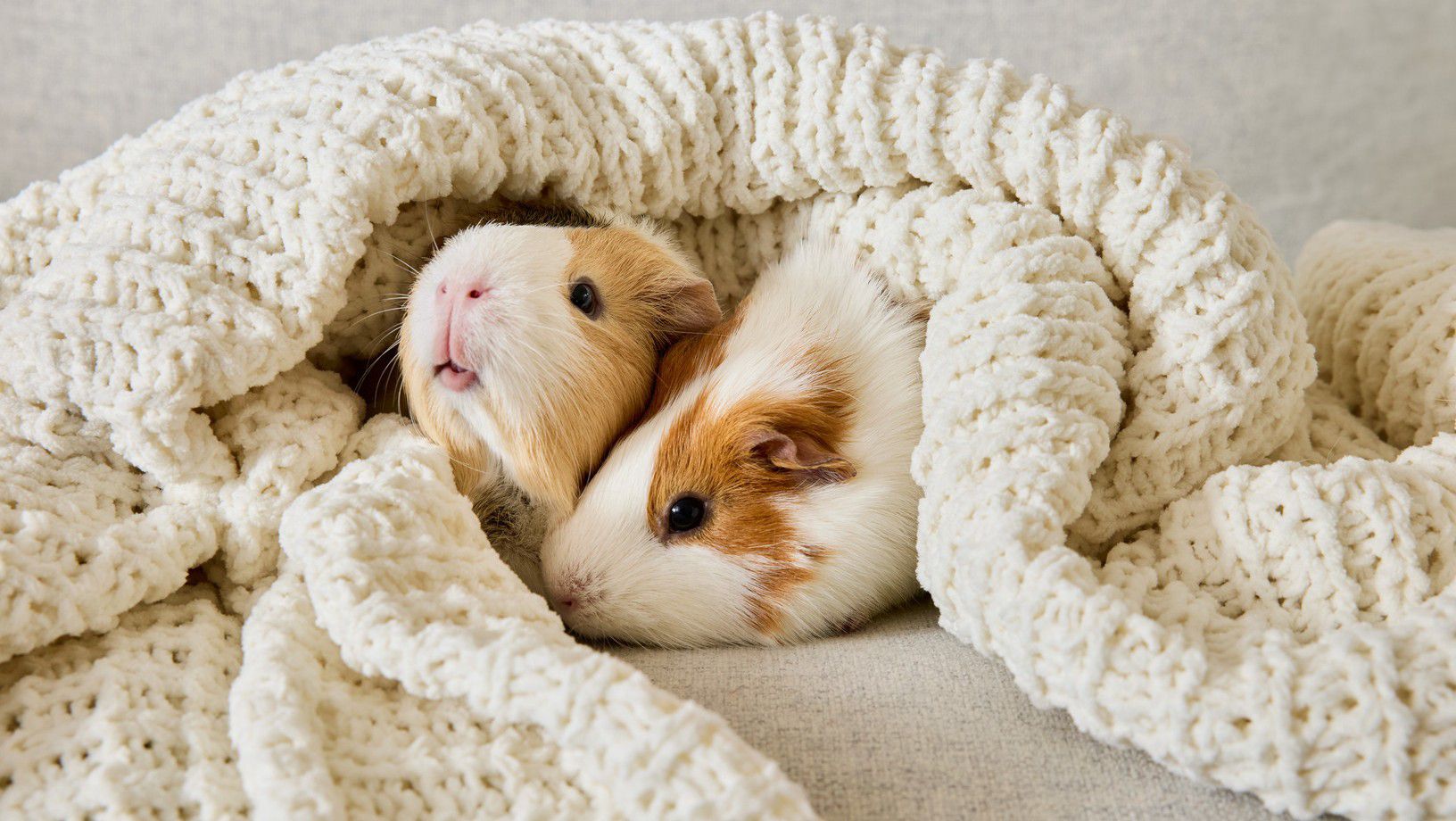
Guinea pigs are one of the most consistently recommended small pets for families, and for good reason. They’re social, gentle, and active during the day, which means kids actually get to interact with them at normal hours. They rarely bite when handled carefully, vocalize in a charming way (the squeaking is often a sign they’re happy to see you), and genuinely seem to enjoy interaction with their people.
Guinea pigs are highly social animals and are happiest living with other guinea pigs. While some can live alone, it’s generally recommended to keep guinea pigs in pairs or small groups whenever possible. A guinea pig living solo will need significantly more enrichment and social interaction from their people to thrive. They need a spacious enclosure, fresh hay (which should make up the bulk of their diet), fresh vegetables daily, and regular cage cleaning.
They’re not a low-maintenance pet, but their temperament makes them genuinely rewarding for kids and adults alike. More on what to expect in guinea pigs and kids and the full care overview at guinea pig care guide.
Hamsters
- Best for: Older kids (10+), teenagers, adults
- Care level: Low to moderate
- Lifespan: 2 to 3 years
Hamsters are one of the most popular first pets, but there’s one thing many families don’t know going in: hamsters are nocturnal. They sleep through most of the day and become active in the evening and overnight. For a young child who wants a pet to watch and interact with after school, this can be a disappointing mismatch.
For older kids, teenagers, and adults who are up later and can appreciate a pet that’s lively in the evenings, hamsters are genuinely low-maintenance and compact. They don’t require a companion the way guinea pigs do, are relatively easy to care for, and can become quite tame with consistent gentle handling.
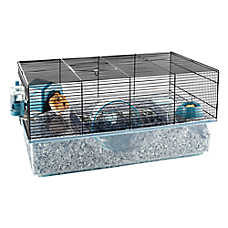
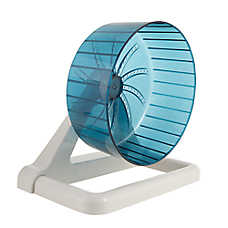
Hamsters do best in a larger enclosure than many starter cages offer. A cage at least 40 inches long with deep bedding for burrowing, a solid-surface wheel (not wire, which can injure small feet), and enrichment items keeps them physically and mentally stimulated. For more on setup, hamster care guide and hamster cage accessories cover everything you need.
Rabbits
- Best for: Older kids (10+), teenagers, adults, families with space
- Care level: Moderate to high
- Lifespan: 8 to 12 years
Rabbits live much longer than most people expect, which is worth understanding before bringing one home. A rabbit is a 10-year commitment, and their care needs are more involved than hamsters or gerbils. They need a spacious enclosure or a rabbit-proofed free-roam area, fresh hay as the foundation of their diet, daily leafy greens, and regular handling to become comfortable with people.
Rabbits can be affectionate and entertaining companions, but they’re also prey animals by instinct. They can be easily startled, don’t enjoy being held the way a guinea pig might, and can injure themselves if they struggle while being carried. For these reasons, they tend to be a better fit for older kids who can interact with them at floor level rather than picking them up frequently.
They also need veterinary care, including spay or neuter for longer-term health, which is an important cost consideration. The rabbit care guide covers the full picture, and so you want a pet rabbit is a useful checklist for first-time rabbit households.
Gerbils
- Best for: Kids ages 8 and up, first-time small pet owners
- Care level: Low
- Lifespan: 3 to 5 years
Gerbils are active, curious, and entertaining to watch. Unlike hamsters, they’re crepuscular, meaning they’re most active at dawn and dusk, which tends to align better with a family’s schedule than a strictly nocturnal pet. They’re social and should be kept in same-sex pairs or small groups.
They’re fast-moving and can be a bit tricky to handle at first, which is why they tend to be a better fit for kids old enough to move slowly and calmly around them rather than very young children. With regular gentle handling from a young age, they can become comfortable with people.
Care requirements are relatively low: a well-ventilated enclosure with deep bedding for digging, fresh food and water daily, and regular spot-cleaning. They’re a genuinely manageable first pet for kids who are ready for the responsibility.
Fancy rats
- Best for: Older kids, teenagers, and adults
- Care level: Moderate
- Lifespan: 2 to 3 years
Fancy rats are consistently underrated as pets. They’re intelligent, social, and genuinely affectionate in a way that surprises many first-time rat owners. Rats can learn their names, come when called, navigate puzzle feeders, and form strong bonds with their people. Many rat owners describe them as dog-like in personality, just scaled way down. For pet parents who want a small pet that genuinely enjoys interaction, rats can be especially rewarding. Many enjoy riding on their person’s shoulder, climbing onto arms or laps, and eagerly greeting their people during out-of-cage time, almost like a tiny dog excited to see you.
They do best in pairs or small groups and need a multi-level cage with enrichment, toys, and opportunities to climb and explore. They benefit from daily out-of-cage time and interaction, which makes them more time-intensive than gerbils or hamsters but also more rewarding in terms of actual connection.
Their shorter lifespan is worth being aware of going in, particularly for families with children who may find it a hard experience. The fancy rat care guide has everything you need to get started.
Fish
- Best for: All ages, including younger kids with adult involvement
- Care level: Low to moderate (varies by setup)
- Lifespan: Varies widely by species
Fish are an excellent first pet for families with younger children, with one important caveat: adult involvement is always necessary to some degree. Children can absolutely help with feeding and observation, but parents should plan to stay involved in tank maintenance, water quality monitoring, and overall care to help keep fish healthy long term.
A betta fish in a filtered, heated tank is one of the most practical setups for beginners. Bettas are visually striking, have distinct personalities, and often do well alone in an appropriate setup. Depending on tank size and compatibility, some bettas can also live peacefully in a community tank with certain tank mates, such as snails, shrimp, or compatible fish species. For a community tank with multiple species, how to set up an aquarium for multiple fish is a helpful starting point.
Goldfish are often thought of as the simplest option, but they actually require more space and filtration than most people realize. A single goldfish in a bowl is not an appropriate setup. A properly filtered tank of at least 20 gallons is a much better environment and leads to a healthier, longer-lived fish. More on goldfish-specific care in how to take care of your fancy goldfish.
The upside of fish: they teach observation, routine, and responsibility in a low-pressure way. Watching a well-maintained tank is genuinely calming for kids and adults alike.
Parakeets (budgies)
- Best for: Older kids, teenagers, adults who want an interactive pet
- Care level: Moderate
- Lifespan: 7 to 15 years
Parakeets, also called budgies, are one of the most popular pet birds in the world, and they make genuinely engaging companions for pet parents who are up for the interaction. They can be trained to step onto a finger, mimic sounds and words, and are social enough to thrive in a lively household.
They need a roomy cage, daily interaction, fresh food and water, and regular cage cleaning. They’re not a pet you can leave without stimulation for long periods. A lone parakeet needs consistent daily interaction with their person; a pair can keep each other company but may bond more to each other than to you.
Parakeets do produce noise and feather dust, which is worth factoring in for households with allergies or anyone sensitive to sound. They’re a long commitment, potentially 15 years, and are better suited to families where older kids or adults will be the primary caretakers. The full setup and care guide for parakeets is at parakeet care guide.
Quick comparison: which pet fits your family?
- Younger kids (under 8): Fish with adult involvement, guinea pigs with supervision
- Kids ages 8 to 12: Guinea pigs, gerbils, fish
- Older kids and teens: Hamsters, fancy rats, rabbits, parakeets
- Adults and first-time owners: Any of the above based on time and interest, with rats and guinea pigs being especially rewarding for people who want more interaction
- Limited time: Fish or gerbils
- Want a social, interactive pet: Guinea pigs, fancy rats, or parakeets
- Want something lower-maintenance: Fish or gerbils
Getting set up: what you’ll need
Most small pets need the same core supplies: an appropriately sized enclosure, species-specific bedding or substrate, food, water bottle or bowl, enrichment items, and a hiding spot. Starter kits available for most species pull these together in one purchase and take the guesswork out of getting started. A few things first-time owners often overlook:
- Enclosure size: Bigger is almost always better.Starter kits can be a great way to simplify setup and get core supplies in one purchase, but it’s still worth checking that the enclosure size is appropriate for your chosen species and long-term needs.
- Bedding depth: Burrowing animals like hamsters and gerbils need deep bedding to express natural behaviors. A few inches isn’t enough.
- Ongoing consumables: Bedding, food, and hay (for guinea pigs and rabbits) are recurring costs that add up. Budget for these before bringing your pet home.
- Vet care: Even small pets can need veterinary attention. An exotic animal vet who sees small mammals, birds, or reptiles may be different from a standard dog and cat practice. Find one before you need one.
For a full overview of what goes into a small animal’s living space, what do I need to put in my small animal’s cage? is a practical starting point. And once you’re ready to bring a child into the routine, teaching children to care for small pets has guidance on making pet care a genuinely positive experience for kids.
Frequently asked questions (FAQs)
What is the easiest small pet to take care of?
Fish and gerbils tend to be the least time-intensive options, though “easy” is relative. Fish require consistent water maintenance and appropriate tank setup, which takes more knowledge upfront than daily effort. Gerbils need daily feeding and weekly cage cleaning but are otherwise fairly independent. No small pet can go without daily attention to food, water, and basic welfare.
Are hamsters good pets for kids?
Hamsters can be great pets for older kids who understand that they sleep during the day and are most active in the evening. For younger children who expect a pet to be playful and interactive after school, hamsters can be a disappointment. They’re also faster and more fragile than guinea pigs, which can make them harder for young children to handle safely.
Do guinea pigs make good first pets?
Yes, guinea pigs are one of the most consistently recommended first pets for families. They’re gentle, social, vocal, and active during the day. They do need a significant amount of space, daily fresh vegetables, and ideally a companion of their own species, so they’re not the absolute lowest-maintenance option. But their temperament makes them genuinely rewarding for both kids and adults.
How do I help my child learn to care for a pet responsibly?
Start with age-appropriate tasks and clear expectations. A young child can help pour food or add fresh water with supervision. Older kids can take on bedding changes and habitat cleaning. The key is consistency, not perfection. A parent staying involved and modeling good habits is more effective than handing over full responsibility and hoping for the best. It’s also important to teach children to wash their hands before and after interacting with pets or cleaning habitats to help protect both the animals and the humans caring for them.
What small pet lives the longest?
Of the commonly kept small pets, rabbits have the longest lifespan at 8 to 12 years or more, followed by parakeets at 7 to 15 years depending on care. Guinea pigs typically live 4 to 7 years, gerbils 3 to 5, and hamsters and fancy rats 2 to 3 years. Lifespan is worth considering alongside the child’s age, since a pet that outlives a child’s interest phase becomes an adult responsibility.
Information in this article is not intended to diagnose, treat or cure your pet and is not a substitute for veterinary care provided by a licensed veterinarian. For any medical or health-related advice concerning the care and treatment of your pet, contact your veterinarian.