

National Kitten Day Guide: Caring for a New Kitten
In this Article
- Key takeaways
- New kitten essentials checklist
- Setting up a safe space
- Feeding your kitten
- Litter training
- Socialization and handling
- Play and enrichment
- Scratching, biting, and the behaviors that challenge new kitten parents
- Grooming your kitten
- Veterinary care in the first year
- Frequently Asked Questions (FAQs)
Key takeaways
- Schedule your kitten’s first vet visit within the first week at home, even if they seem perfectly healthy
- Kittens need a vaccine series starting at 6 to 8 weeks of age, with boosters every 3 to 4 weeks until 16 to 20 weeks
- Kitten food is formulated specifically for growth and should be fed until around 12 months of age
- Most kittens instinctively use a litter box, but setup and cleanliness are the variables that make the difference
- The first few weeks at home are a critical socialization window, and how you handle your kitten now shapes how they relate to people for life
- Scratching and biting are normal kitten behaviors, but redirecting them consistently from the start sets better habits
There’s nothing quite like bringing home a new kitten. The curiosity, the tiny paws, the way they fall asleep in the most impractical places. It’s also, genuinely, a lot of responsibility in a very small package.
National Kitten Day on July 10 is a great reminder that kittens need more than food and a warm spot to sleep. They need structure, veterinary care, play, socialization, and a home that’s set up with their safety in mind. This guide walks you through everything you need to know to give your new kitten the start they deserve.
New kitten essentials checklist
Before your kitten comes home, having the right supplies in place makes the transition smoother for both of you. For a comprehensive rundown of what’s needed, what do I need to take care of my new cat? covers the full setup. The core list includes:
- Food and water bowls: Separate bowls, placed away from the litter box. Shallow, wide bowls tend to be more comfortable for kittens.
- Kitten food: Formulated for growth and higher energy needs, not adult cat food.
- Litter box and litter: One box per cat plus one extra: for example, if you have two cats, we recommend three liter boxes. Low-sided boxes are easier for small kittens to enter.
- Carrier: For vet visits and safe transport. Getting your kitten comfortable with it early pays off later. What kind of cat carrier should I buy? covers your options.
- Bed or blanket: Kittens sleep a lot. A cozy, dedicated spot helps them feel secure.
- Scratching post: An essential from day one. Scratching is a normal behavior, and having an appropriate outlet reduces damage to furniture.
- Toys: Wand toys, crinkle balls, and tunnel toys support play, exercise, and learning.
- Nail clippers: Start trimming nails early so your kitten gets used to the process.
- Brush or grooming mitt: Especially important for longhaired breeds.
- Collar and ID tag: Even for indoor kittens. Accidents happen.
Setting up a safe space
Kittens explore everything, and homes have more hazards than most people realize until they have a kitten in them. Before bringing your kitten home, how to kitten-proof your home walks through the room-by-room safety steps worth taking. The most important principle: start small. Don’t give a new kitten the run of the entire house on day one. Set up a single room with everything they need, including food, water, litter box, bed, and a few toys, and let them explore and settle in at their own pace. Once they’re confident and comfortable in that space, gradually expand their access. A few specific setup priorities:
- Keep electrical cords hidden or covered, since kittens chew
- Store medications, cleaning products, and toxic household chemicals in closed cabinets
- Check for toxic houseplants and either remove them or place them out of reach
- Secure windows and balconies, kittens can fall from heights easily
- Keep toilet lids closed for very young kittens
Feeding your kitten
Kittens have significantly higher caloric and nutritional needs than adult cats. They’re growing rapidly, and their food needs to support that. Feed your kitten a food specifically formulated for kittens, not adult cat food, until they’re approximately 12 months old. For more detail on what to look for in kitten nutrition, what should I feed my kitten? has a full breakdown.
Wet food, dry food, or a combination of both are all appropriate for kittens. Wet food contributes moisture to their diet, which is beneficial given that cats naturally have a low thirst drive. If you’re transitioning your kitten from whatever they were eating before, mix the new food gradually with the old over seven to ten days to avoid digestive upset.
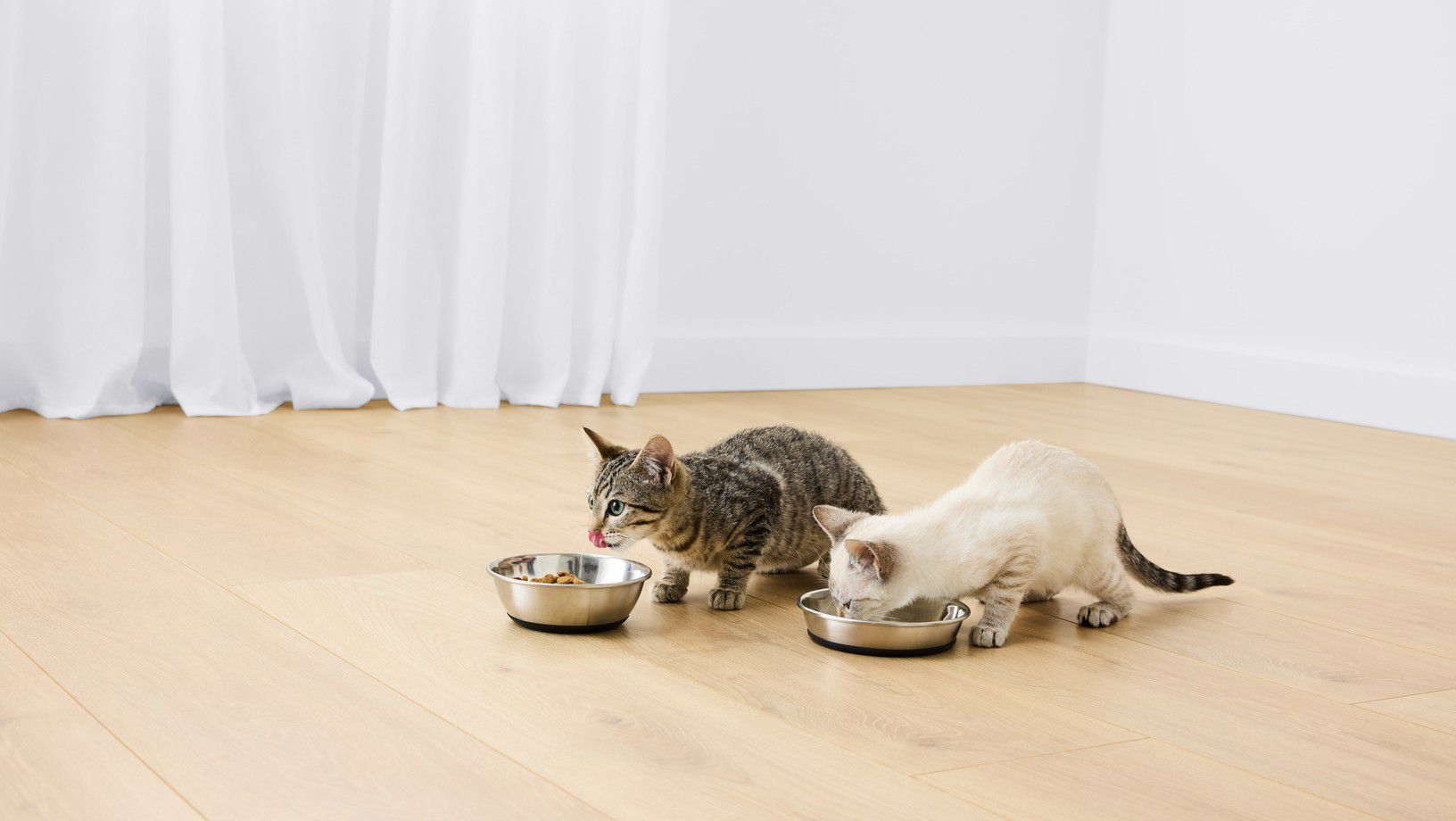
Feed kittens in a quiet, low-stress location. Young kittens typically eat three to four small meals per day. By six months, twice daily feeding is appropriate for most. However, some cats are free feeders and graze throughout the day. In these situations, ensure that your pet is getting the correct amount of food in the total day per label recommendations. Always keep fresh water available.
Litter training
Most kittens take to a litter box naturally, especially if they were with their mother and siblings before coming to you. The instinct to bury waste is innate. What matters most is making sure the setup makes it easy for them to succeed.
- Location: When you first bring a young kitten home, keep them in a small, controlled area like a bedroom or bathroom with their litter box nearby. Giving a tiny kitten access to the entire house, especially if the litter box is far away (like in a basement), can lead to accidents and make training more difficult. As your kitten grows and becomes more confident navigating your home, you can gradually move the litter box to its permanent location. Avoid placing the litter box near food or water bowls.
- Box size: A box that’s too tall is hard for a young kitten to climb into. Use a low-sided box initially.
- Litter choice: Most cats, including kittens, prefer unscented, fine-textured litter. Stick with what they were using before if possible, and transition slowly if you want to switch.
- Cleanliness: Scoop at least once a day. A dirty box is the most common reason kittens avoid it. Keep the box clean and they’ll use it consistently.
If your kitten has an accident, clean it up without scolding. Punishment creates anxiety and can actually make litter box avoidance worse. If accidents are frequent or your kitten is straining in the box, contact your vet.
Socialization and handling
The weeks between two and twelve months are a critical window for kitten socialization. How your kitten experiences people, other animals, sounds, and environments during this period shapes their personality and comfort levels for life. Kittens that are handled gently and regularly during this window tend to grow into more confident, adaptable adult cats. AAHA’s life stage guidelines emphasize acclimating kittens to the things they’ll encounter as adults: the carrier, car rides, veterinary visits, handling of paws and ears, toothbrushing, and nail trims. Starting these early, with positive reinforcement and treats, makes each of them significantly easier over time.
- Handle your kitten daily, touching their paws, ears, and mouth to build tolerance for grooming and vet exams
- Introduce the carrier as a normal, comfortable space rather than something that only comes out for vet visits
- Expose your kitten to household sounds, visitors, and new experiences gradually
- Introduce other pets slowly and under supervision, with separate spaces to retreat to
Play and enrichment
Play is how kittens learn. Chasing, pouncing, batting, and wrestling aren’t just entertainment; they’re how kittens develop coordination, problem-solving, and social skills. Young kittens are most interested in playing with other kittens until around 12 weeks of age, after which play with toys and their human family becomes more central. Interactive wand toys that you control are among the most valuable for building the bond between you and your kitten and providing meaningful exercise. Aim for two to three dedicated play sessions per day of 10 to 15 minutes each. A kitten that gets consistent, quality play time tends to be calmer and better behaved overall. Leave puzzle feeders and solo toys available for when you’re not around. Rotating toys every few days keeps them feeling new and interesting.
Scratching, biting, and the behaviors that challenge new kitten parents
Scratching
Scratching is normal, healthy, and not something you can or should try to eliminate. Cats scratch to stretch their muscles, maintain their claws, and mark their territory. What you can do is redirect it to appropriate surfaces from the start. Offer a scratching post or pad from day one, placed near where your kitten already tends to scratch. When they use furniture, redirect them to the post calmly. Reward them when they use it. Placing double-sided tape on the furniture corners they’re targeting can deter them while they build the habit. For more on managing scratching behavior, how to stop your cat from scratching the furniture covers what works.
Biting and play aggression
Kittens explore and play with their mouths. Biting during play is normal at this age, but it’s a habit worth addressing before they’re larger. Never use your hands as toys. When your kitten bites during play, stop the session immediately and redirect to a toy. Consistency matters more than any single correction. If your kitten bites hard enough to break skin, yelp (or say “ouch” sharply), withdraw your hand, and end the play session. Over time, they learn that biting ends the thing they enjoy most.
Grooming your kitten
Starting grooming habits early, when your kitten is young and adaptable, sets the stage for a much more cooperative cat. Even short-haired kittens benefit from regular brushing as a bonding activity and as an opportunity to check for skin issues or parasites.
- Professional grooming: If your kitten will need professional grooming throughout life, especially if they have a long or thick coat, it's helpful to introduce them to a groomer while they're young. Early, positive grooming visits help kittens become comfortable with handling, bathing, nail trims, and other grooming procedures. Many pet care providers also offer professional cat grooming services.
- Brushing: Introduce brushing gradually. Let your kitten sniff the brush, brush just a few strokes with treats involved, and build up from there. Should I groom my cat? covers how much grooming different coat types actually need.
- Nail trimming: Start early, go slowly, and use treats. Even weekly touch sessions with the clippers builds familiarity.
- Ear checks: Check ears weekly for odor, redness, or discharge.
- Toothbrushing: Dental disease affects the majority of cats by age three. Starting toothbrushing in kittenhood, even just acclimating them to flavored gel on a brush, makes a significant long-term difference. 5 tips for healthy cat teeth covers at-home dental care options.
Veterinary care in the first year
Your kitten needs to see a veterinarian within the first week at home, regardless of whether they came from a shelter, a breeder, or a friend’s litter. This first visit establishes baseline health, screens for parasites and infections, starts the vaccination series, and gives you a chance to ask every question that’s accumulated in your first few days.
Vaccines
The core kitten vaccine series covers panleukopenia, herpesvirus, and calicivirus (combined in the FVRCP vaccine) plus rabies. The vaccine series typically begins at 6 to 8 weeks of age, with boosters given every 3 to 4 weeks until the kitten is 16 to 20 weeks old. After that initial series, boosters are given at one year and then on a schedule your vet recommends. For a full overview, cat vaccinations: when should your cat get them? explains the timeline and what each vaccine protects against.
Spay and neuter
AAHA recommends scheduling a spay or neuter procedure before 5 months of age. Beyond the well-known benefits of preventing unwanted litters, early spaying and neutering is also associated with reduced risk of certain cancers and behavioral benefits for many cats. Ask your vet when they recommend timing the procedure based on your kitten’s individual development.
Parasite prevention
Kittens can carry intestinal parasites even if they appear healthy. Your vet will check for these at the first visit and recommend appropriate treatment. Flea prevention should also be discussed early, since even indoor kittens can be exposed. More on cat flea prevention and treatment.
Microchipping
Microchipping is a permanent form of identification that can reunite a lost cat with their family when a collar and tag can’t. AAHA recommends having your kitten microchipped during the first visit. It takes seconds, causes minimal discomfort, and lasts a lifetime. Should I microchip my cat? explains what microchipping involves and why it matters.
For everything you can expect during that first appointment and beyond, what to expect when you take your cat to the vet is helpful preparation.
Frequently Asked Questions (FAQs)
My kitten seems scared and is hiding. Is that normal?
Completely normal. Moving to a new home is a significant adjustment for a kitten. Hiding for the first few days is a very typical response to an unfamiliar environment and unfamiliar people. Give them space, speak quietly around them, and let them come out on their own timeline. Forcing interaction tends to slow down the adjustment rather than speed it up. Starting small kittens in a controlled area such as a bedroom may be best for them to acclimate to your home. Slowly introduce them to the rest of your house and other pets once they feel comfortable. Most kittens settle in noticeably within a few days to a week.
When should I switch my kitten to adult cat food?
Around 12 months of age is the standard recommendation for most cats. Large breeds like Maine Coons may benefit from staying on kitten food a bit longer given their extended growth period. When you do switch, do it gradually over seven to ten days to avoid digestive upset. If you are concerned about your kitten not growing or gaining weight too quickly, discuss food recommendations with your veterinarian.
My kitten is using the floor near the litter box instead of in it. What’s going on?
A few possibilities: the box may not be clean enough, the litter texture or scent may not suit them, or the box may be too difficult to enter. Try scooping more frequently, switching to an unscented fine-textured litter if you haven’t already, and check whether the box sides are low enough for easy entry. If the behavior persists or your kitten seems to be straining, a vet visit is warranted.
How much sleep does a kitten need?
A lot. Kittens can sleep 16 to 20 hours a day, especially in their first weeks. Sleep is essential for growth and development, and it’s completely normal for a kitten to have short bursts of intense activity followed by long nap periods. If your kitten seems lethargic rather than just sleepy, or isn’t eating or drinking, that’s worth a call to your vet.
Should I get two kittens?
Two kittens from the same litter or the same age is often recommended for people who are away from home regularly. Kittens entertain and socialize each other, which tends to result in better-adjusted adult cats and fewer behavioral problems. It’s also genuinely fun to watch. That said, two kittens is also twice the responsibility, twice the cost, and twice the energy. There’s no wrong answer, just an honest assessment of what you’re ready for.
Information in this article is not intended to diagnose, treat or cure your pet and is not a substitute for veterinary care provided by a licensed veterinarian. For any medical or health-related advice concerning the care and treatment of your pet, contact your veterinarian.
In this Article
- Key takeaways
- New kitten essentials checklist
- Setting up a safe space
- Feeding your kitten
- Litter training
- Socialization and handling
- Play and enrichment
- Scratching, biting, and the behaviors that challenge new kitten parents
- Grooming your kitten
- Veterinary care in the first year
- Frequently Asked Questions (FAQs)