Beneficial Bugs for Better Terrarium Maintenance
In this Article
Harnessing nature for a healthier habitat
You may have heard that adding certain bugs to your terrarium can help support habitat maintenance. But which bugs are helpful, and what do they actually do?
There is a whole world of helpful tiny creatures, from mites and nematodes that help manage pests like fungus gnats, to a “clean-up crew” comprised of isopods or earthworms that help break down organic material and debris in the habitat. Let’s explore the helpful animals that can support a healthy terrarium.
Key note: Beneficial bugs do not make a terrarium self-cleaning. Instead, they can help break down small amounts of organic material that may be missed during routine cleaning and support a healthier substrate environment.
What is a “clean-up crew”
A “clean-up crew” is a common term for small “bugs”, usually isopods and springtails, that break down small amounts of decaying organic material and help reduce mold. Despite the name, a “clean-up crew” does not truly clean the habitat. Instead, a “clean-up crew” supports good maintenance habits and helps remove small pieces of waste or debris that can be missed during cleaning. Think of a “clean-up crew” as your helpers who pick up things you may miss when you spot clean or after a deep clean.
Now that we’ve established what the “clean-up crew” does, let’s introduce some common crew members!
Springtails are tiny arthropods, usually under ¼ inch long. They feed on soil microorganisms and help break down small amounts of organic matter such as decaying leaves, poop, and leftover food. This activity may help reduce mold and support a healthier substrate when the habitat is properly maintained.
The most common springtail used in terrariums is the temperate white springtail (Folsomia candida). Don’t be surprised if springtails seem to appear almost by magic in your habitat. They are common in nature and may find their way into warm, humid terrariums.
Springtails pose no known health risk to pets, including pet arthropods like millipedes and isopods or pet arachnids like tarantulas and jumping spiders. In fact, small or young amphibians, reptiles, and arachnids may treat them like a tasty snack.
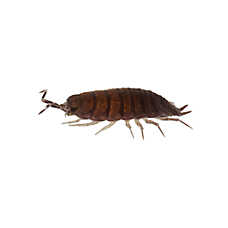
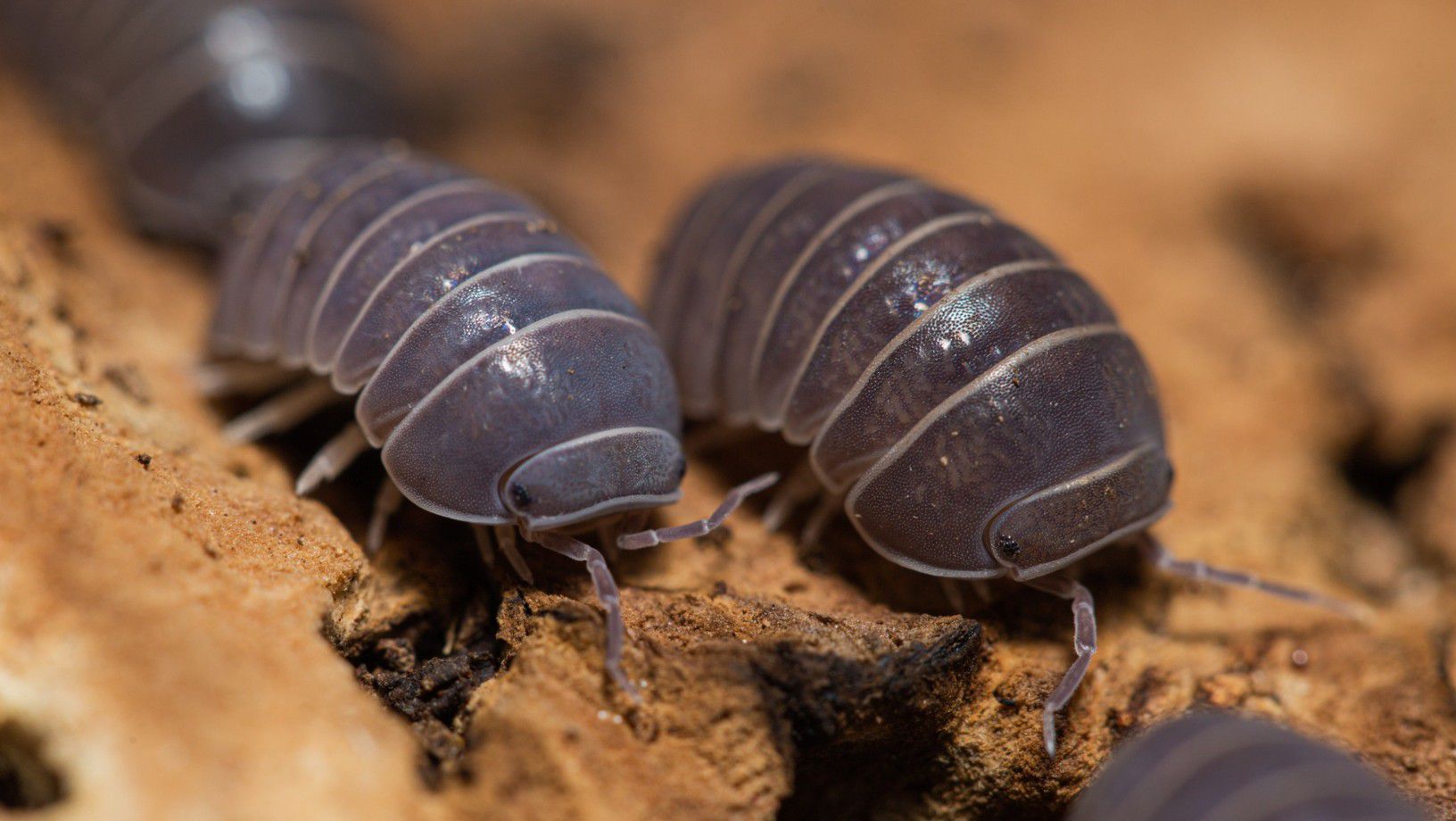
Isopods, also called “roly-polies,” “sow bugs,” or “pill bugs,” are detritivores, which means they eat decaying organic matter. These very small crustaceans can eat small pieces of organic matter that are missed during spot cleaning. They generally range in length from ¼ -1 inch, but there is significant variation between species.
Many people keep dedicated colonies of interesting isopods, while others include them as part of a terrarium setup. Many insectivores, or insect-eating animals, will happily snack on the isopods in their enclosure. For this reason, fast-breeding isopods like Powder Blue or Powder Orange isopods (Porcellionides pruinosus) are popular in habitats where pets may eat some of the “clean-up crew”.
Fun fact: Not all isopods can roll up. In fact, most cannot. This ability is called conglobation, and is also seen in millipedes.
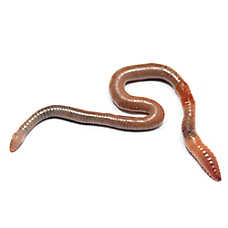
In larger habitats, earthworms can be valuable members of a “clean-up crew”. Red wigglers, also called compost worms, are often used for this purpose. They help a terrarium in the same way they help a garden. Earthworms help break down organic matter by shredding leaves, consuming soil and microbes, and leaving behind healthy, aerated soil. They may also serve as a snack for some terrarium inhabitants.
Another “clean-up crew” option for larger terrariums is millipedes. Smaller, fast-breeding millipedes, such as greenhouse millipedes (Oxidus gracilis), can serve a similar role to isopods and earthworms. They help break down organic material and burrow through the soil. Because millipedes do not spend all of their time underground, they may also be more accessible than earthworms and some reptiles and amphibians may try to eat them. Pet millipedes are therefore not recommended as part of a “clean-up crew” in habitats with animals that may try to eat them.
Beetles can be very efficient at breaking down organic material in certain dry environments or larger terrarium setups. However, they should not be relied on to maintain the habitat in place of regular care., Because beetles are often eaten by other animals in the terrarium, pet beetles are typically not recommended as a “clean-up crew”.
Important note: If your goal is to keep and breed a specific bug, such as isopods, millipedes, or beetles, it is best not to keep reptiles, amphibians, or other animals in that habitat.
Other Tiny Animals That Support Habitat Balance
In addition to isopods and springtails, other tiny animals can help support habitat balance by managing certain pests, consuming fungi, or helping break down organic material.
Nematodes are tiny, soil-dwelling organisms that can help manage pests like fungus gnats, harmful mites, moths, and more. They are more commonly used in gardens, but they can also be a nontoxic option for managing pests in pet habitats.
Different nematodes help manage different pests. One common species used for fungus gnat management is Steinernema feltiae. These tiny organisms thrive in warm, moist environments, where they prey on fungus gnat larvae.
Another small but mighty microorganism to include in a terrarium are mites. When most people hear the word “mites,” they think of parasites that can bother or harm pets. However, some soil mites can be helpful. They may help manage pests, break down organic material, and support a healthier habitat.
Soil mites are often grouped by family or type. One common beneficial group is Oribatid mites. These larger, slower-moving mites help break down smaller particles that may be missed by larger “clean-up crew” animals like millipedes, isopods, and earthworms. They are nonpathogenic, which means they do not cause illness, and pets usually do not notice them.
Another group is Astigmatid mites. These mites consume fungal growth in the soil, helping keep soil fungus in balance and supporting nutrient cycling. They also help break down other organic material. They are typically smaller and faster moving than Oribatid mites.
A third group is Mesostigmatid mites, which are predatory mites. These fast-moving mites prey on soil-dwelling pests. Some are used to naturally reduce harmful mites and may benefit pets, plants, and people. For example, Phytoseiulus persimilis preys on spider mites that harm plants. Another beneficial mite, Stratiolaelaps scimitus, helps control fungus gnats and is sometimes found in a beneficial relationship with millipedes.
Where do I get beneficial bugs for my terrarium?
Like anything added to your terrarium, you want to be conscious of where you get your bugs from. While you can find isopods and springtails in your yard or a local wildlife area, wild bugs may have been exposed to pesticides or herbicides. They can also carry parasites.
To ensure a healthy population, you can find isopods, springtails, earthworms, and more at your local PetSmart! The beneficial bugs at your local PetSmart were raised in safe and healthy environments and are ready to be added to your habitat.
As for nematodes and mites, these can be found in local garden centers or sourced through an online retailer specializing in gardening.
Frequently Asked Questions (FAQs)
Help! I see bugs in my terrarium. What should I do?
First, try to identify the bugs before deciding how to manage them. Some bugs are helpful, while others may need to be removed. It is not uncommon for springtails to find their way into a habitat or for fungus gnats to hatch after you add new substrate or plants. Start by spot cleaning waste and making sure you remove uneaten food after 24 hours.
Do I still need to clean the habitat if I have a “clean-up crew”?
Yes. Beneficial bugs do not replace regular habitat care. Pet parents still need to remove visible waste, uneaten food, soiled substrate, and excess mold. These animals can help break down small amounts of organic material and support a healthier substrate environment, but routine spot cleaning, substrate maintenance, live plant care, and full habitat checks are still necessary.
Do I need to care for my “clean-up crew”?
Yes. Although they are low maintenance, “clean-up crew” animals are still living creatures. In larger or sparsely stocked habitats, you may need to add food for them.
Isopod food, fish flakes, reptile food, and small pieces of sweet potato or squash can make good food items for your “clean-up crew” and are typically safe for many pets. Always make sure any food added to the habitat is safe for all of the animals living there.
I have too many isopods. What happened?
A large isopod population may mean that too much food is available in the habitat. Fast-breeding isopods will continue to reproduce as long as they have enough food, moisture, and space. You can catch and rehome extra isopods if you feel there are too many.
Is it safe for my pet to eat my “clean-up crew”?
In most cases, the bugs commonly used in a “clean-up crew” are safe for pets to snack on. Some are also used as live feeders. Because anything added to your habitat may be eaten by your pet, ensure that all food, plants, substrate, and “clean-up crew” animals are safe for the species in the enclosure.
Can I collect isopods and springtails from my yard?
This is strongly discouraged. Isopods and springtails may be present in your yard, but wild-caught bugs can carry parasites, unwanted pests, or chemical residues. It is safer to get your “clean-up crew” from a responsible source to reduce risks to your pet.