
Preventing Messes With a Dog Diaper
In this Article
Life with a dog is full of love, laughter – and the occasional mess. Sometimes, our furry friends need a little extra help when it comes to bathroom habits. When accidents become a regular thing, dog diapers can help. They’re a simple and effective way to manage everything from potty training puppies to dealing with incontinence, giving you and your pup more freedom and less stress.
Whether you're dealing with a senior dog, a new puppy or a dog with medical needs, choosing the right diaper can make life easier for both of you.
Why do dogs need diapers?
Here are some of the most common reasons dogs might need a little extra coverage.
- Aging-related incontinence: As dogs get older, they might struggle to control their bladder. Diapers provide an easy way to prevent messes and keep them comfy.
- Medical conditions: Some pups experience frequent urination due to diabetes, kidney disease or urinary tract infections. A diaper can help keep them dry and happy.
- Female dogs in heat: If your female dog is in heat, you’ll notice some discharge. A well-fitted dog diaper for female dogs helps keep your home and furniture clean.
- Post-surgery recovery: After surgery, some dogs have trouble moving or holding their bladder. A diaper ensures they stay clean and comfortable while they heal.
- Marking behavior: Some male dogs love to mark their territory indoors, which isn’t ideal for your furniture. Wearing a dog diaper for male dogs can help control this behavior.
- Mobility challenges: Dogs with limited mobility may struggle with regular bathroom breaks. Diapers help them stay dry and comfortable.
- Potty training help: Puppy diapers can be a useful tool for preventing accidents while reinforcing puppy potty training. They can be great for short-term use while your pup learns proper bathroom habits.
Types of dog diapers
Here are the main options available:
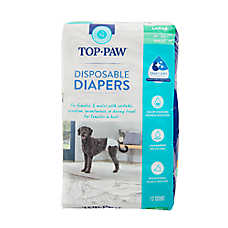
- Disposable dog diapers: These are easy to use and to throw away after each use – perfect for travel or temporary needs. However, they can be costly over time and are less eco-friendly.
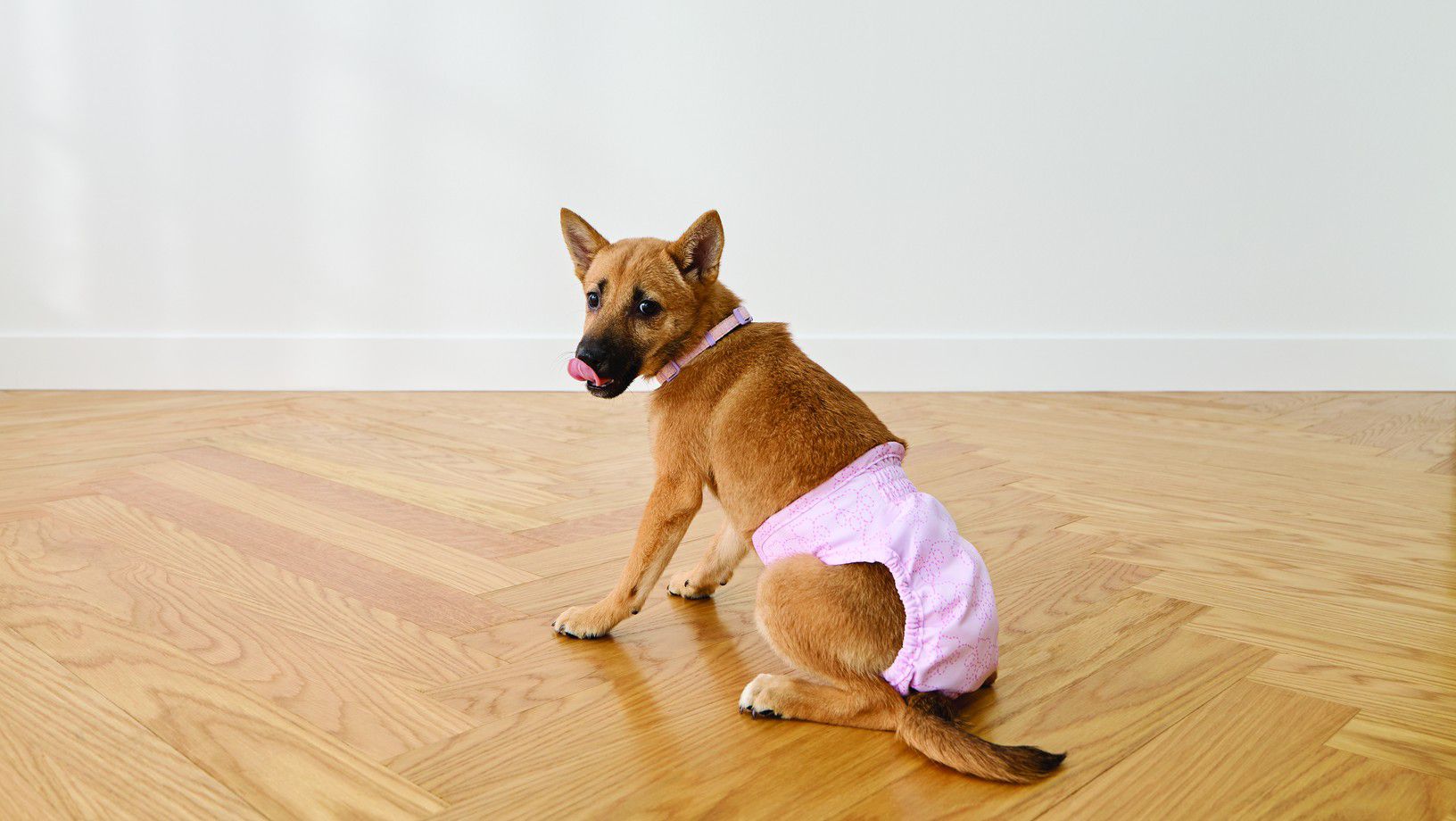
- Reusable dog diapers: Made from washable fabric, these are great for long-term use and are more environmentally friendly. They usually have adjustable straps and padding for a snug and comfy fit.
- Male dog belly bands: Designed just for male dogs, these bands wrap around their midsection to absorb urine. They’re a great option for preventing marking but won’t work for dogs that need full coverage.
- Diapers for female dogs in heat: Specifically designed for female dogs, these diapers help manage heat cycle discharge and keep both your pup and your home clean.
How to use dog diapers
Getting the most out of dog diapers means using them correctly. Here’s what you need to know:
- Change them often: Like human diapers, dog diapers should be changed regularly to avoid discomfort and irritation. Leaving them on too long can cause rashes or infections.
- Keep your pup clean: Before putting on a fresh diaper, wipe your dog’s fur and skin with a pet-safe wipe or damp cloth. This helps prevent infections and odors.
- Find the perfect fit: A too-tight diaper can cause discomfort, while a too-loose one may leak. Adjust the straps to ensure a snug and secure fit.
- Dispose of or wash properly: If using disposable diapers, seal them in a bag before tossing. For reusable ones, wash them with pet-safe detergent and let them dry completely before reuse.
The perks of dog diapers
Dog diapers have some great benefits for both pups and their owners:
- Keep your home clean: Say goodbye to unexpected messes on your floors, furniture and carpets!
- Help with training: Diapers can be a handy backup while reinforcing good bathroom habits in puppies.
- Support dogs with health conditions: Whether it’s incontinence, urinary tract infections or mobility issues, diapers help keep dogs comfortable.
- Reduce stress for pet parents: Knowing your dog is protected from accidents can give you peace of mind.
Choosing the right dog diaper
Finding the perfect diaper for your dog makes all the difference:
- Size matters: A well-fitted diaper prevents leaks and discomfort. Measure your pup’s waist before making a purchase.
- Absorbency levels: Some diapers are more absorbent than others. If your dog has frequent accidents, look for high-absorbency options.
- Material and comfort: Breathable fabrics prevent irritation. If your dog wears diapers often, opt for soft, moisture-wicking materials.
- Disposable vs. reusable: Disposable diapers are convenient, but reusable options save money and reduce waste in the long run.
Potential downsides of dog diapers
While dog diapers can be helpful, there are a few drawbacks to consider:
- Adjustment period: Some dogs might take time to get used to wearing diapers. Encouraging them with positive reinforcement helps.
- Hygiene concerns: Not changing diapers frequently can lead to rashes or infections. Regular diaper changes and cleanups are essential.
- Cost factor: Disposable diapers can add up over time, but reusable options are a budget-friendly alternative.
Introducing diapers to your dog
Not all dogs take to wearing diapers right away, but you can make the transition smoother.
- Let them sniff and explore: Give your pup time to check out the diaper before putting it on.
- Use rewards: Treats and praise can make the experience more positive.
- Start slow: Let your dog wear the diaper for short periods and gradually increase the time.
- Watch for signs of discomfort: If your dog seems irritated, check the fit and adjust as needed.
FAQs
Is it OK to keep a diaper on a dog?
Yes, but you should change it frequently to prevent irritation and give your dog breaks when possible, especially when letting your dog outdoors.
What can I use instead of a dog diaper?
If a diaper isn’t an option, puppy pads may be a good alternative.
Can I use human diapers on my dog?
Yes! Many pet parents modify human diapers by cutting a tail hole. However, dog-specific diapers provide a better fit and greater comfort.
Do dog diapers work for incontinence?
Absolutely! Dog diapers are specifically designed to help manage incontinence and keep dogs comfortable.
What are dog nappies?
Dog nappies are another term for dog diapers. Whether you call them nappies or diapers, they serve the same purpose—keeping your furry friend (and your home) clean.
Can a dog door help prevent accidents?
Yes, dog doors can be helpful during potty training because they allow your pup to easily access a designated potty area whenever they need it. This freedom can help reinforce the habit of going outside, reducing indoor accidents. However, it's important to supervise your puppy initially and ensure they clearly understand where and when they're expected to potty.
Does a puppy crate help with potty training?
A puppy crate can greatly simplify potty training because puppies instinctively avoid going to the bathroom in their sleeping areas. When used correctly, a crate teaches your puppy to hold their bladder until they're taken outside. It establishes a predictable routine, helping your pup understand when and where it's appropriate to go potty.
Information in this article is not intended to diagnose, treat or cure your pet and is not a substitute for veterinary care provided by a licensed veterinarian. For any medical or health-related advice concerning the care and treatment of your pet, contact your veterinarian.