Dog Costumes for Every Size and Breed: A Complete Buyer’s Guide
In this Article
Key takeaways
- Back length, chest girth, and neck girth are the three measurements that determine costume fit. Sizing varies significantly between brands, so always cross-reference your measurements against the specific chart
- Breed body shape matters as much as size: a Dachshund and a Beagle may weigh the same but need completely different costume styles
- Brachycephalic breeds (Bulldogs, Pugs, French Bulldogs, Boxers) need the most careful costume selection due to their compromised airways and heat sensitivity
- A costume should not restrict breathing, limit vision, prevent normal movement, or leave small parts that can be chewed off and swallowed
- Introduce any costume gradually over several days with treats and positive reinforcement, not in one go on the day of the event
The dog costume market has expanded considerably, and so has the range of quality. There are costumes that fit beautifully, move naturally, and leave your dog looking their most photogenic. There are also costumes that look great in product photos and immediately cause your dog to freeze in place, topple over, or attempt a dramatic floor roll. The difference usually comes down to fit, materials, and whether the style actually suits your dog’s body type.
This guide covers how to measure correctly, what to look for in a quality costume, which styles work best by breed type and body shape, and how to get your dog comfortable wearing whatever you choose.
How to measure your dog for a costume
Every costume sizing guide uses the same three measurements. Take them with your dog standing, using a soft tape measure:
- Back length: From the base of the neck (where the collar sits) to the base of the tail. This is the most critical measurement for any costume that covers the torso.
- Chest girth: Around the widest part of the chest, just behind the front legs. The most common fit failure point, particularly for barrel-chested breeds.
- Neck girth: Around the base of the neck. Important for any costume with a collar, hood, or neckline.
Once you have your measurements, cross-reference them against the size chart for the specific costume you’re buying, not a generic guide. A medium in one brand may be equivalent to a large in another. If your dog falls between two sizes, go up. A slightly loose costume is more comfortable and easier to adjust than one that restricts movement.
What makes a safe, well-fitting costume
Across every breed and size, the same safety checklist applies:
- Clear airway: Nothing covering the nose or mouth. No hoods that fall forward over the muzzle. This matters for all dogs but is a hard safety requirement for brachycephalic breeds.
- Unobstructed vision: Hats, headpieces, and hoods should not fall into the dog’s field of vision.
- Full range of motion: Your dog should be able to walk, sit, lie down, and turn around without the costume pulling, binding, or bunching. Test this in the store or at home before the event.
- No small detachable parts: Buttons, decorative elements, and dangling accessories that can be chewed off are a swallowing hazard. Secure them thoroughly or avoid them entirely.
- Breathable materials: Soft, lightweight fabric over synthetic or stiff material. Heavy costumes trap heat, which is a meaningful concern for thick-coated dogs and brachycephalic breeds.
- Reasonable weight: A costume that’s heavy for the dog’s size causes fatigue and discomfort, particularly in smaller dogs.
Never leave a dog unsupervised in a costume. Even a well-fitted, safe costume can become a hazard if a dog gets a leg caught, chews through a closure, or gets tangled.
How to introduce a costume
The most common reason dogs may not like a costume is that they were introduced all at once, usually moments before a photo or an event. The dogs who genuinely don’t mind wearing things are almost always dogs whose owners took a few days to build a positive association.
A five-day introduction framework:
- Day 1: Leave the costume near your dog’s space. Let them sniff it freely with no pressure to interact.
- Day 2: Hold the costume near your dog and offer treats. The costume equals good things.
- Day 3: Drape it over your dog’s back for a few seconds without fastening. Treat immediately, then remove.
- Day 4: Fasten it briefly while your dog eats a treat. Under a minute. End before they object.
- Day 5: A full short session with your dog moving around in the costume, treated throughout.
Watch your dog’s body language throughout. Freezing, crouching, tail tucked, ears flat, refusing treats they would normally take: these are signs the costume isn’t working for your dog. A festive bandana or a Halloween collar is a completely legitimate alternative for a dog who genuinely dislikes wearing things. For a deeper look at reading body language during dressing, best dog Halloween costumes 2026 covers the full signals guide.
Costumes by breed type and body shape
Small dogs: Chihuahuas, Yorkshire Terriers, Maltese, Toy Poodles (under 15 lbs)
The main consideration for very small dogs is weight: a costume that represents a meaningful percentage of a three-pound dog’s body weight causes fatigue quickly. Lightweight fabric costumes, capes, and onesie-style designs work best. Avoid anything with structural elements (wire frames, thick foam) on very small dogs.
Style ideas: food costumes, character onesies, capes, superhero designs. Small dogs photograph particularly well in costumes that frame the face, since their expressions are a large part of the appeal.
Medium dogs: Beagles, Corgis, Cocker Spaniels, Border Collies (15 to 50 lbs)
Style ideas: animal costumes, character outfits, themed onesies, superhero capes. This is the range where coordinating human-dog costumes work best proportionally.
Large and giant breeds: Labs, Golden Retrievers, German Shepherds, Great Danes (50 lbs and up)
Large and giant breed costumes require the most measurement care.
Brachycephalic breeds: French Bulldogs, Bulldogs, Pugs, Boxers, Boston Terriers
Flat-faced breeds need the most careful costume selection of any group. Their compressed airways mean any additional restriction around the face or neck is a safety concern, not just a discomfort issue. Beyond airway considerations, brachycephalic breeds overheat more easily than other dogs, making heavy or thick costumes genuinely hazardous in warm conditions.
For these breeds specifically:
- Avoid any full head costume or anything that adds bulk around the face or neck
- Choose lightweight, breathable fabric over foam, felt, or anything that traps heat
- Keep wearing time shorter than you might with other breeds
- Watch closely for heavy panting, reluctance to move, or distress signals
The best costume approaches for brachy breeds: a cape attached at collar level, a themed body onesie that stops at the collar, or festive seasonal apparel. They look spectacular in these because their faces carry so much expression.
Long-bodied breeds: Dachshunds, Basset Hounds, Corgis
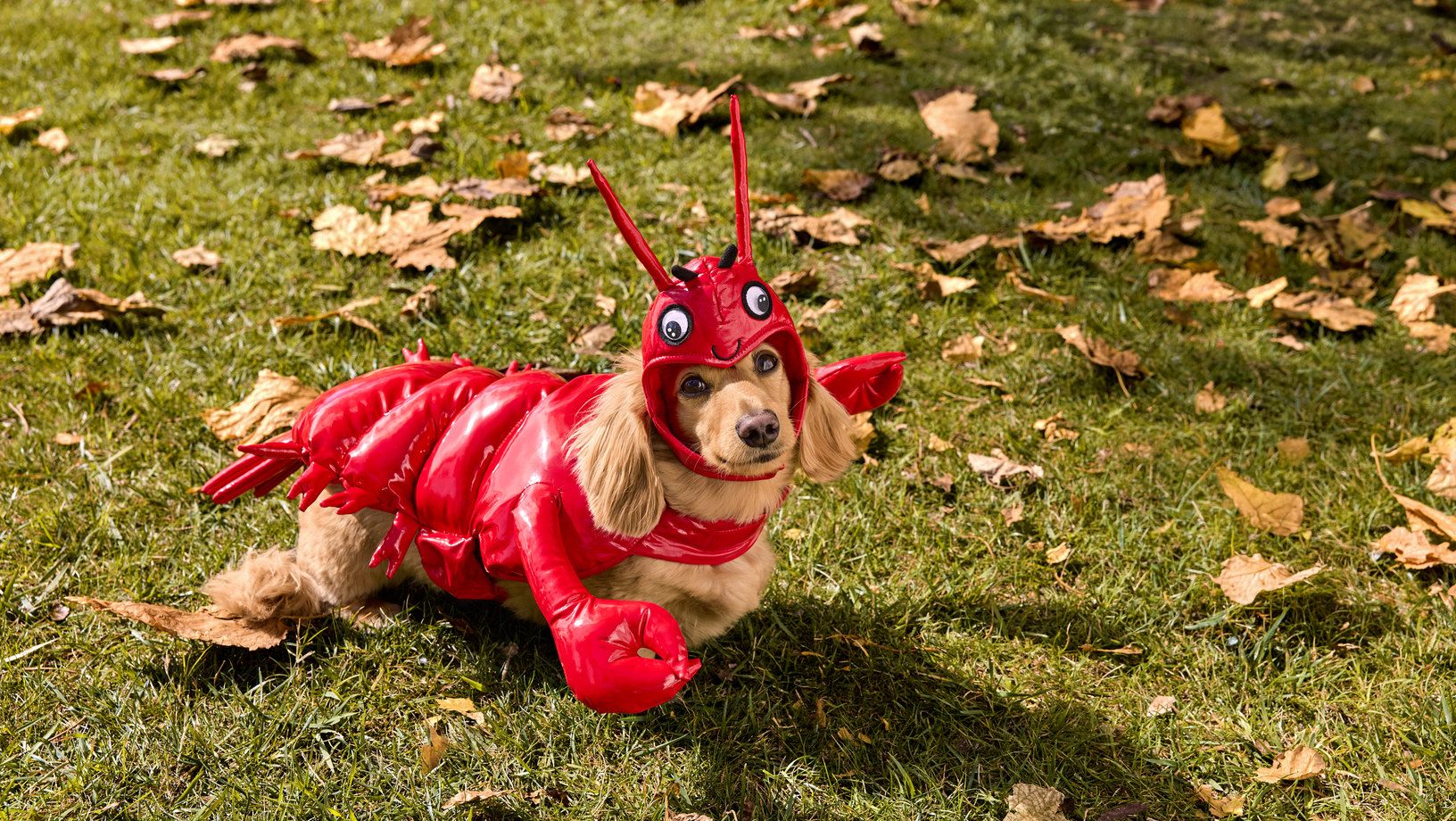
Standard sizing almost never works for Dachshunds. The back-length-to-chest-girth ratio of a Dachshund is unlike any other dog. Look for costumes specifically designed for long-bodied breeds, or brands that offer Dachshund sizing separately. Costume concepts that celebrate the shape, a submarine, a caterpillar, a hot dog (obviously), an alligator, tend to be both better fitting and better received by audiences.
Double-coated and thick-coated breeds: Huskies, Samoyeds, Bernese Mountain Dogs, Chow Chows
Heavy coat breeds have two costume considerations: heat and fit. The dense undercoat adds significant girth that standard sizing doesn’t account for, and thick coats trap heat more efficiently than lightweight ones. Measure chest girth over the coat, not under it, and size up accordingly. Keep wearing time limited, especially in any warm indoor environment. Lightweight capes and minimal add-ons tend to work better than full-body costumes for these breeds.
Beyond Halloween: other occasions for dog costumes
Dog costumes have moved well beyond October. Birthday parties, New Year’s Eve photos, holiday cards, Fourth of July, Valentine’s Day, and just-because photo sessions all sustain a costume market year-round. The buyer’s guide principles apply regardless of occasion: fit, comfort, material quality, and a positive introduction process are always the relevant variables.
Browse the full selection of dog costumes and seasonal apparel in the PetSmart Dog Shop.