
Choosing The Best Cat Nail Clippers
In this Article
While trimming a cat’s nails may seem like something better left to a skilled veterinarian or cat groomer. However, it’s an important part of protecting your kitty’s health – as well as your furniture, other pets and the humans in your home. Long, untrimmed nails may cause your cat pain and discomfort, and they may even lead to infections. Sharp nails can also damage furniture and cause your cat to inadvertently scratch other pets and people.
When trimming your cat’s nails, you will need a quality cat nail clipper. They’re one of the essential products you’ll need when you adopt a cat. Here is an introduction to taking care of your cat’s nails and choosing the right cat nail clippers for you and your pet.
Signs that your cat’s nails need trimming
Your kitty may be overdue for an in-home pedicure if:
- You hear a clicking sound when your cat is walking on hard surfaces.
- Your cat’s nails are snagging on fabric or carpets.
- You can visibly see the nails beginning to curl back toward the paw.
- Your cat is engaging in excessive scratching behavior.
All about cat nails
Technically, what we refer to as a cat’s nail is a retractable claw made of two parts: a hard outer shell and a soft sensitive interior called the quick. The outer shell is made of keratin, a tough fibrous protein that varies in thickness and hardness depending on the cat’s age, health, and activity level. The quick is the inner, living part of the nail. It contains blood vessels and nerves that make it highly sensitive. This is the part of your cat’s nail you want to avoid cutting as you trim, since it can cause bleeding and a great deal of pain. In light-colored or clear nails, the quick appears as a pinkish area inside the nail. In dark colored nails, the quick is harder to see or may not be visible at all, so you’ll need to be more cautious when trimming.
The importance of trimming your cat’s nails
Trimming your kitty’s nails should be part of your regular care routine for several reasons.
- Prevent pain and discomfort: When nails grow too long, they can curl back and grow into the paw pads, potentially causing pain and infections.
- Help avoid injury and infections: Overgrown nails are more likely to break or split, which can lead to injuries and infections. Trimming also helps your cat avoid snagging nails on fabric or carpets, which can cause injury to the nail and surrounding skin.
- Protect furniture and humans: Regular trimming keeps your cat’s nails blunt, reducing the chances of scratching your furniture or accidentally scratching a person. Learn more about ways to stop your cat from scratching furniture.
- Encourage healthy scratching behavior: Cats naturally scratch for many reasons – to mark territory, stretch their muscles and maintain healthy nails. However, when their nails grow too long, they may scratch excessively or inappropriately. Regular trimming helps maintain an appropriate length and encourages healthy scratching habits like using scratching post.
- Maintain mobility and health. When long nails become uncomfortable, it may affect your cat’s posture or the way it walks, potentially leading to joint and muscle problems over time.
Types of cat nail clippers
There are four different types of cat clippers you might use when trimming your cat’s claws.
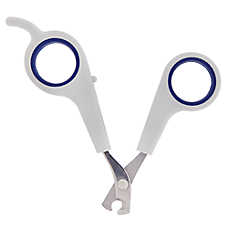
- Scissor-style clippers: These resemble small scissors and are designed for easy handling and precise cuts. They are straightforward and easy to use, making them ideal for people who have never cut a cat’s claw before. They also allow precise control which can be helpful when trimming a small cat’s nails. However, scissor-style cat nail trimmers may not work as well on thicker nails, causing you to have to make multiple cuts. Additionally, using scissor-style clippers for an extended period can get tiring quickly if the handles are not well suited to your hands.
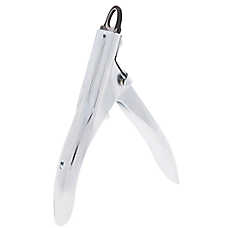
- Guillotine-style clippers: These devices have a hole where the nail is inserted, and a blade that slices the nail like a guillotine when the handle is squeezed. This allows for quick and efficient nail trimming – which can be really helpful if your cat hates trimming time. This type of cat nail clipper is effective for trimming small to medium-sized nails cleanly and efficiently. It may not be suitable for very thick or hard nails, since it may require more force. Additionally, the design of these cat nail trimmers makes it more difficult to see the quick, potentially increasing the risk of cutting into it. Using guillotine-style clippers requires more precision and practice, which may be challenging for beginners.
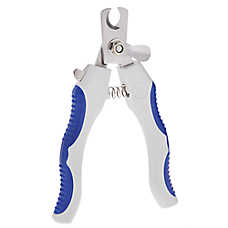
- Plier-style clippers: These resemble small pliers with strong, durable blades that can cut through thick nails. Since they offer more cutting power, they’re ideal for cats with tougher or thicker nails. They typically have an ergonomic design with non-slip handles that reduce hand fatigue during clipping. However, their bulky size may make them inappropriate for use with small cats, and the design can sometimes obstruct the view of the nail and the quick, increasing the risk of accidental injury.
- Grinding tools: These devices grind down the nail using a rotating abrasive surface. They offer a smooth finish and are most effective for pets with thick or tough nails. Grinders offer precise control, reducing the risk of cutting into the quick. One downside of grinders is that the noise and vibration can frighten some cats. The process can take longer than clipping, which can be hard with cats who have little patience for trimming nails.
What to look for in cat nail clippers
Keep these points in mind as you consider which type of cat nail cutter is right for you and your kitty.
- Sharp blades: Sharp blades yield clean and precise cuts, reducing the risk of crushing or splintering the nail. Look for clippers made from high-quality stainless steel that will maintain their sharpness over time.
- Ergonomic grip: A comfortable grip gives you better control and reduces hand fatigue, especially if you need to trim nails frequently or are working with multiple pets.
- Safety guard: The safety guard on cat claw clippers prevents you from overcutting by limiting the amount of nail that can be trimmed at one time. This is especially useful for beginners. The best cat nail clippers have adjustable guards that can accommodate different lengths and thicknesses of nails.
- Size and weight: Clippers that are too large or heavy can be difficult to use, causing discomfort for you and your cat. Choose lightweight and compact devices that are easy to handle, especially when clipping the nails of small cats or kittens.
- Visibility: It’s important to be able to see the nail and the quick clearly to avoid cutting too much and causing pain or bleeding. Look for cat nail clippers with an open design or clear safety guards that provide good visibility of the cutting area.
How to cut your cat’s nails
Once you’ve chosen the best cat nail clippers, the following tips can help you cut your kitty’s nails successfully the first time.
- Have all your supplies handy: Before you scoop up your cat for a clipping, be sure to have everything ready. That includes your cat nail clippers, treats, and rewards, a towel to restrain your kitty if necessary, and styptic powder or cornstarch to stop bleeding in case you cut the quick.
- Choose the right time: Pick a time in your cat is normally calm and relaxed, like after a meal or a nap.
- Create a calm Environment: Choose a quiet space with minimal distractions.
- Familiarize your cat with the clippers: Let your calf inspect and sniff the clippers and gently tap the clippers around your cat’s pause to help them get used to the sensation.
- Position your cat: Place your cat on your lap or on a stable surface. If your cat is resistant or overly nervous, gently wrap them in a towel leaving one paw exposed.
- Grasp a paw: Hold the par with your non-dominant hand and press gently on the pad of the pot to extend the nails.
- Locate the quick: In light colored nails, the quick is visible as a pinkish area inside the nail. In dark colored nails where the quick is not visible, you’ll need to trim small amounts gradually until you see a dark spot at the center of the nail indicating you’re getting closer to the quick.
- Identify the cut: Aim to trim just the sharp tip of the nail, leaving a small margin between the cut and the quick.
- Position the clippers: Hold the clippers at a 45° angle to the nail. Be sure you can see the nail clearly.
- Make the cut: Trim the sharp tip of the nail.
- Repeat: Trim the rest of the nails, taking breaks if your cat becomes restless. Don’t forget the dewclaws, located on the inner side of the paw.
- Check for bleeding: Hold a small piece of tissue or cotton against the nail. If there’s any blood, apply styptic powder or cornstarch to stop the bleeding.
- Reward your kitty: Offering treats and praise after each nail is trimmed helps to create a positive association with the process.
Tips for using your cat nail trimmer
- Take it slow: If your cat is not used to having its nails trimmed, start with one or two nails per trimming session and gradually increase the number over time.
- Use positive reinforcement: Always reward your cat with cat treats and affection to create a positive association with the process.
- Be patient: If your cat is stressed, take a break and try again later. Forcing a trimming can lead to negative associations and make it more difficult in the future.
- Get help if you need it. If you’re unsure about the process, ask your veterinarian or a grooming services provider for a demonstration.
Frequently Asked Questions (FAQs)
Which type of nail clipper is best for cats?
Scissor-style clippers are generally best for beginners due to their ease of control. Guillotine-style clippers require more precision and are better suited for experienced users, while pliers-style clippers work well for cats with thicker nails.
Is it OK to use nail clippers on cats?
Yes, it is perfectly fine to use nail clippers designed for pets on cats. It is important to choose the right type and size of clipper to ensure safe and effective trimming. Do not, however, use clippers designed for humans on your kitty.
Is nail clipping painful for cats?
Nail clipping is not painful for cats if done correctly. Trimming only the sharp tip of the nail and avoiding the quick will prevent discomfort. Accidental cutting of the quick can cause pain and bleeding, so it is important to be cautious.
Is it better to cut or grind cat nails?
Both cutting and grinding cat nails are effective methods. Cutting is quicker and more straightforward, while grinding can provide a smoother finish and is less likely to cause accidental injury to the quick. Your choice should be guided by personal preference and your cat’s tolerance for each method.
What happens if you don’t trim your cat’s nails?
Untrimmed nails can become overgrown and cause discomfort, pain and potential infections. Overgrown nails can also curl and grow into paw pads, leading to serious health issues.
Information in this article is not intended to diagnose, treat or cure your pet and is not a substitute for veterinary care provided by a licensed veterinarian. For any medical or health-related advice concerning the care and treatment of your pet, contact your veterinarian.