What To Feed My Pet Rabbit
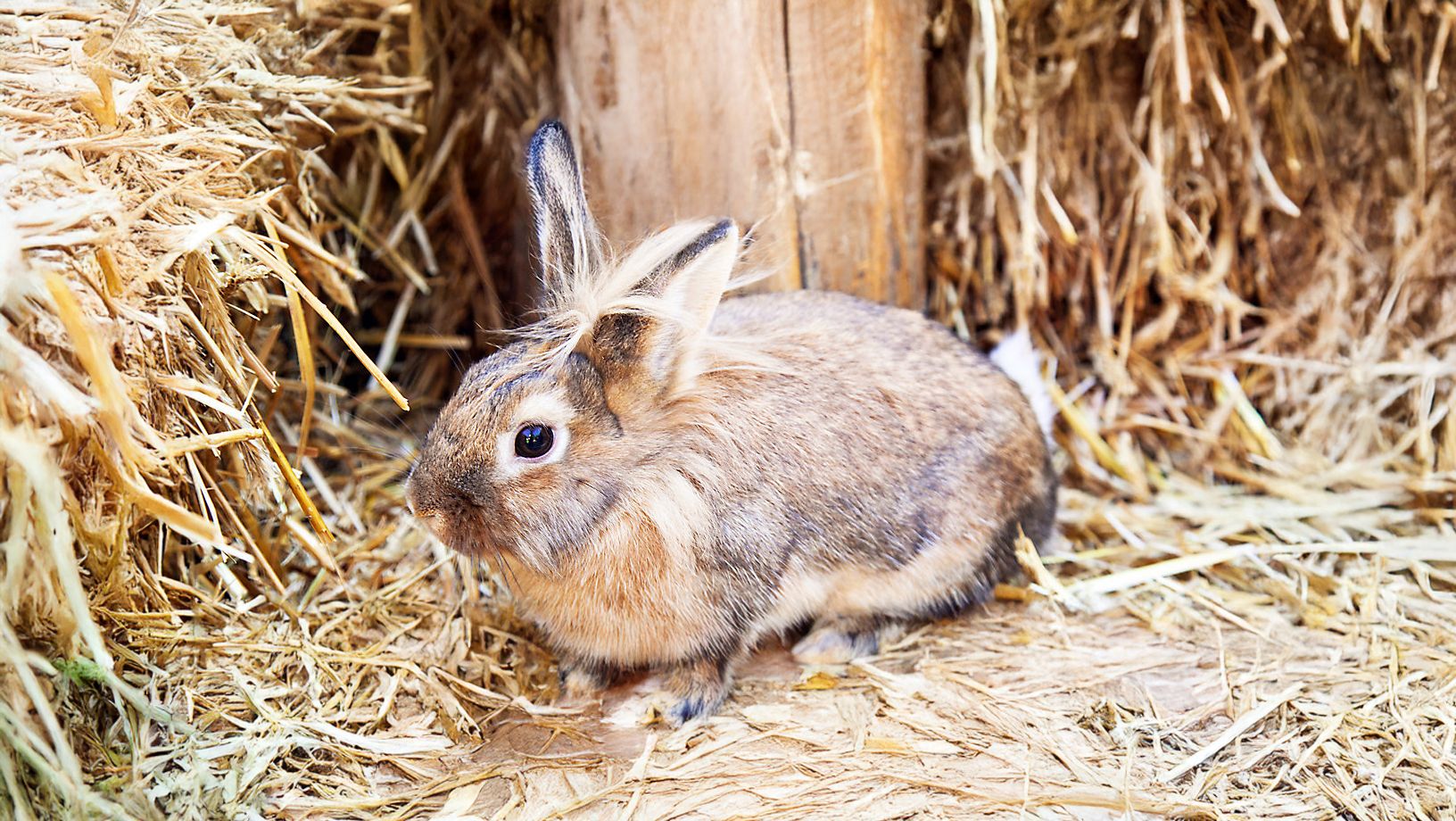
Hay on the menu
Hay should make up most of your rabbit’s meal. Leave hay out for your pet to nibble throughout the day. Your pet’s diet should be broken down like this:
- 75% hay
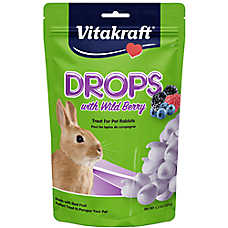
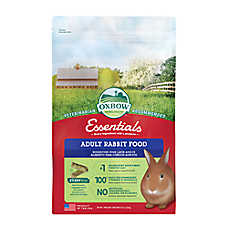
- 20% rabbit pellets
- 5% treats
Choosing the right hay
There are lots of different kinds of hay. The most important type for rabbits is grass hay, which has what’s called “long-strand fiber.” Long-strand fiber is not easy to chew or digest. For bunnies, this is a good thing. Grass hay’s toughness helps keep your pet’s teeth healthy and its roughage helps prevent digestion issues.
Grass hay comes in a number of varieties, including oat hay, orchard grass hay, and Timothy hay. Rabbits may enjoy getting a mix of these different kinds. A varied hay salad is generally healthier and more fun for your bunny.
Change up the menu as they age
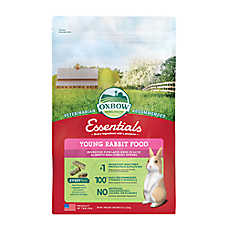
Rabbits under a year old do well on a diet of grass hay and alfalfa, as well as tasty, lower-fiber greens that are high in calcium; such as kale, romaine or Swiss chard. Rabbits who are pregnant, nursing or recovering from an illness may benefit from eating some alfalfa, too. For healthy adult rabbits, though, alfalfa is better as an occasional treat. Talk to your vet before making any changes to your pet’s diet.
Need other supplies while you're shopping for small pets? PetSmart also carries small pet food, small pet cages, small pet treats, small pet hay, small pet litter and bedding, small pet toys and much more. Explore PetSmart's Small Pet Shop to find everything your pet needs, all in one place.
PetSmart offers convenient shopping with Curbside Pickup or in-store pickup. Need something today? We have select items available for Same-Day Delivery in most areas powered by DoorDash. For items you purchase frequently, PetSmart has Autoship that automatically delivers the items you want to your door as often as you'd like. Check the website to see which items are eligible.
Information in this article is not intended to diagnose, treat or cure your pet and is not a substitute for veterinary care provided by a licensed veterinarian. For any medical or health-related advice concerning the care and treatment of your pet, contact your veterinarian.