Mourning Gecko Care Guide: Housing, Feeding and Care Tips
In this Article
Marvelously Miniature Mourning Geckos
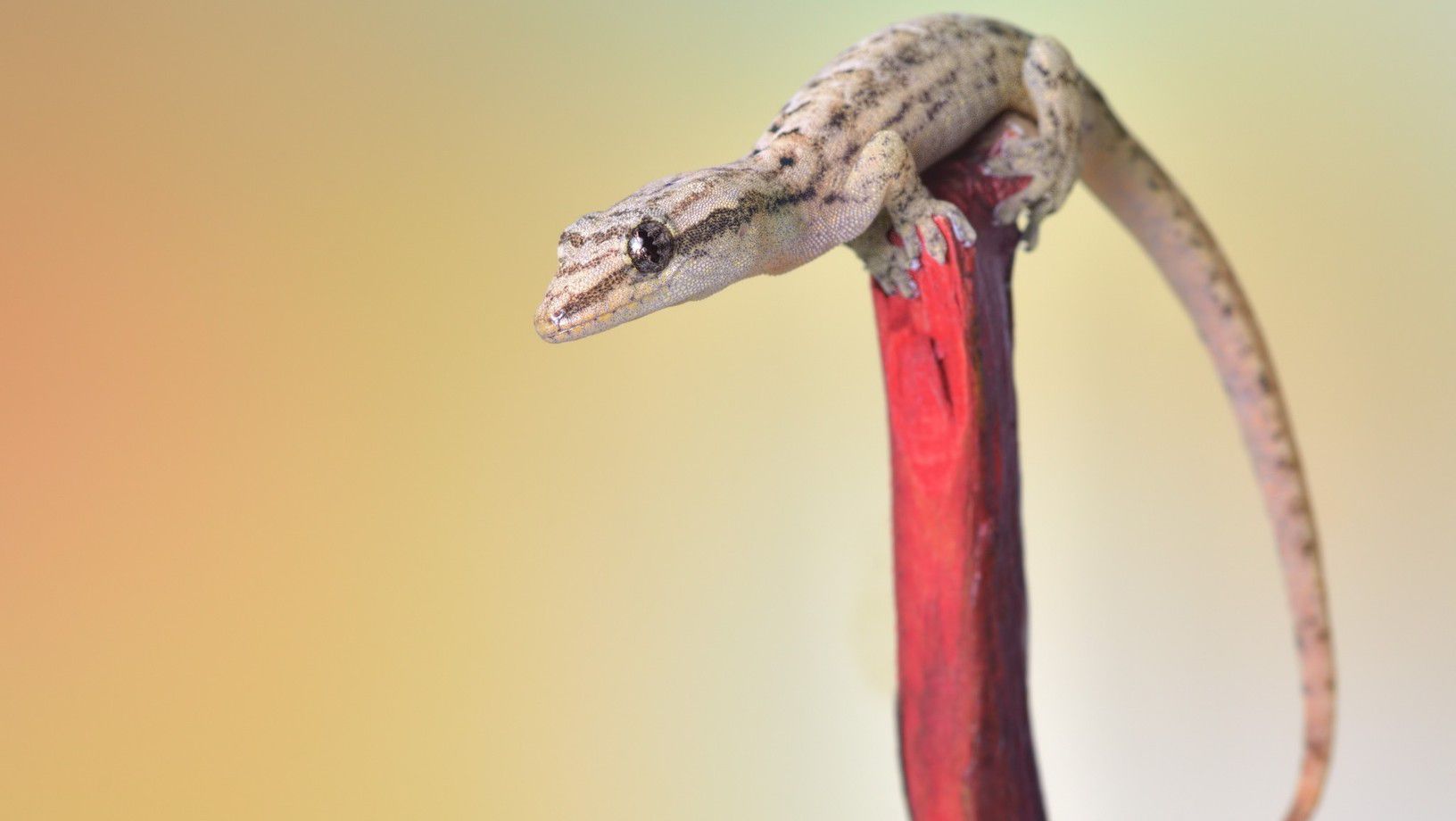
Mourning Geckos (Lepidodactylus lugubris) are a species of gecko found in Southeast Asia, the Pacific islands and coastal areas of Australia. They are considered “micro-geckos” due to their very small size. Growing up to a length of up to 4” long, these light tan to brown lizards spend their time in trees and bushes, consuming fruit and insects. Unlike many other reptiles, Mourning Geckos are social. They prefer to live in groups and make a variety of “squeaks” and “chirps” to communicate with each other.
Male Mourning Geckos account for only about 1% of the population. It was once believed that the entire population was female. It is thought that the name “Mourning Gecko” originated from the idea that all the females were “in mourning” over the lack of males.
Mourning Gecko Pet Profile
Experience Level: Intermediate
Size: Adults average 3-4” long, from nose to tail tip
Lifespan: Approximately 10 years, but some report 15 years or more
Behavior: Arboreal with a strong desire to climb; movements are often quick and jumpy
Habitat: Tall, humid enclosures with plenty of climbing surfaces and plant cover. As arboreal lizards, they spend most of their time off the ground, so vertical space and secure branches are essential.
Activity Pattern: Cathemeral; meaning they can be active for irregular intervals during day or night
Temperament: Social and prefer to live with at least one other individual. That said, these otherwise docile lizards may show aggression as they establish a hierarchy, especially in smaller enclosures. While these fights are rarely serious, pet parents should always use caution when introducing animals to one another and should be prepared to separate animals in the event of a serious altercation.
Important Note: Because Mourning Geckos are parthenogenic, there is no way to prevent them from reproducing. Sexually mature individuals (8-10 months of age) may lay a clutch of 2 eggs every 4-6 weeks, so keepers should be prepared and have a plan to either manage the eggs or to care for hatchlings. Please see “Reproduction, Eggs and Hatchlings” for more information.
How to set up your Mourning Gecko Habitat
Mourning Geckos need a warm, humid environment with space to explore. They are arboreal, meaning they like to climb and spend time in trees, so they need more vertical space than horizontal. A well thought out enclosure helps prevent stress, illness, and behavioral issues.
Choosing the right enclosure
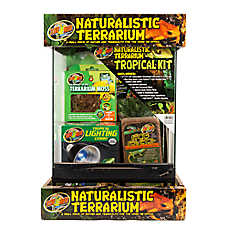
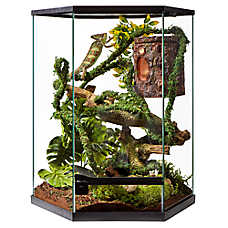
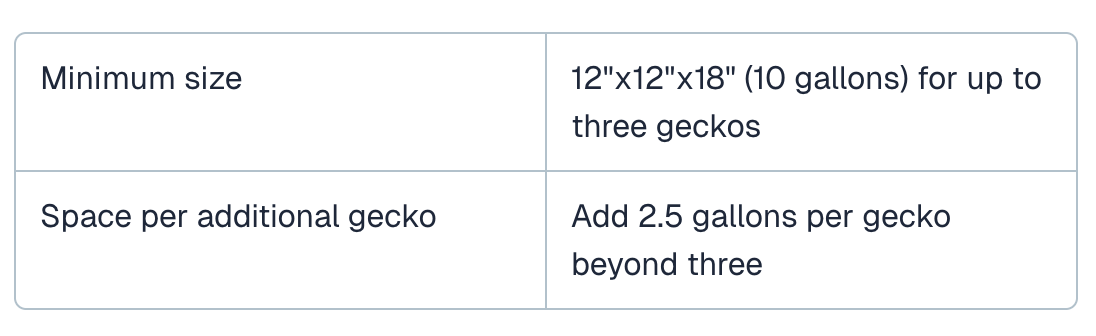
Choose an enclosure that is taller than it is wide, with a secure, ventilated lid. Mourning Geckos are arboreal, so vertical space is essential.
Substrate
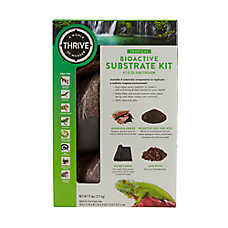
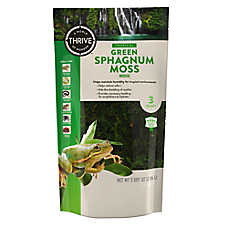
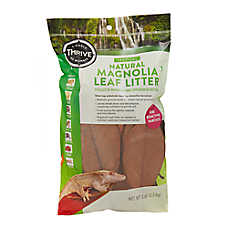
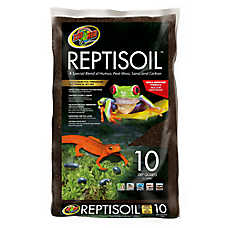
The substrate layer should be two to four inches deep. Good options include Reptisoil, sphagnum moss, tropical reptile bedding, a bioactive substrate, or a mixture of these. Ensure that all substrate is either fine-textured or large enough to avoid accidental ingestion.
What to avoid:
- Cedar or pine wood shavings, which can be a health hazard
- Reptile carpet, which poses a safety risk
Décor and enrichment
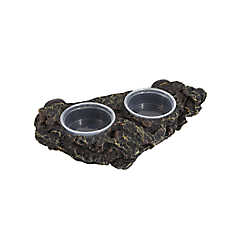
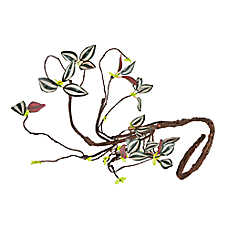
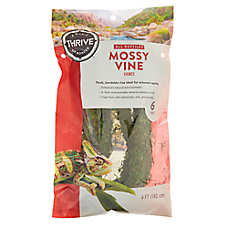
Position branches and décor to allow your Mourning Gecko to climb through all levels of the enclosure. Place several branches in the basking area, and ensure geckos cannot reach the heat source directly to avoid burns. Add additional branches, vines and plants (real or artificial) with broad leaves, as well as décor to provide plenty of hiding spots and climbing enrichment. Provide shallow dishes for food and water, and ensure your gecko can climb in and out of the bowls easily. Place your lighting outside the enclosure, over the screened lid. For heat source placement guidance, see heating, humidity and lighting below.
Care and maintenance
- Spot clean droppings daily
- Deep-clean the entire enclosure every two weeks, or more frequently if foul odor, excessive moisture, mold or pests such as fungus gnats are present
- Bioactive habitats typically go much longer between deep cleans, as isopods and springtails help reduce waste buildup
Heating, humidity and lighting for Mourning Geckos
Temperature gradient
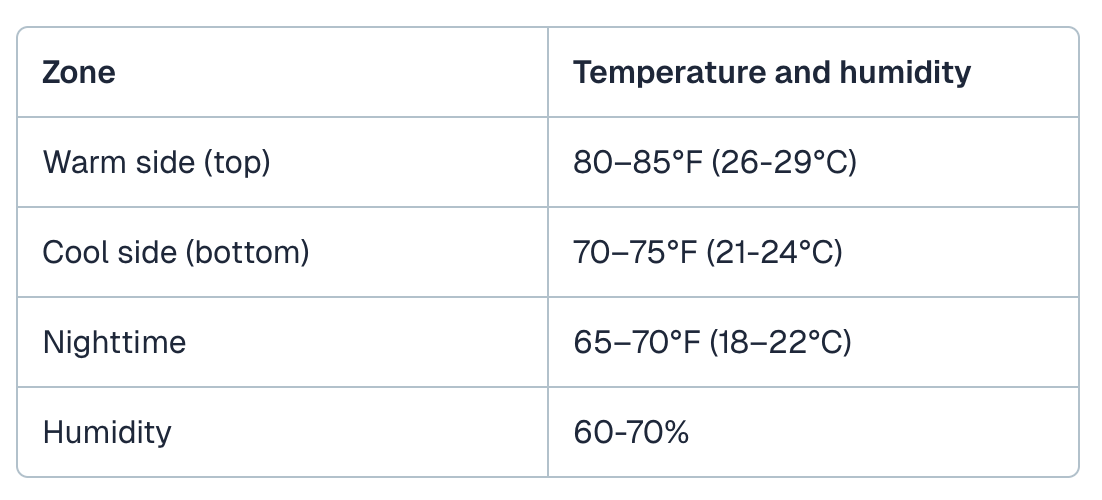
Mourning Geckos require a temperature gradient in their habitat. The basking area should be at the top, nearest the light and heat sources, with the cool area toward the bottom. This allows your Mourning Gecko to regulate their temperature with ease. To create this gradient, choose your heat source. Some bulbs provide light, heat and UVB in one. Ceramic heat emitters and heat mats provide no light and can be used to maintain temperatures at night. Mourning Geckos don't need overnight heat support provided your habitat does not fall below 65°F overnight.
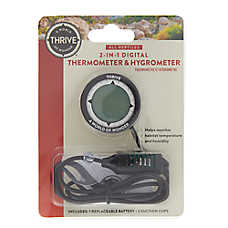
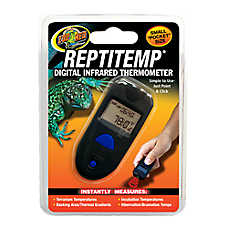
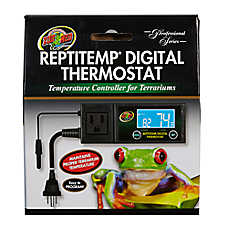
Use a thermostat to ensure optimal temperatures. Place the thermostat sensor in the basking area near where the geckos will be. Monitor the basking and cool areas separately using two thermometers.
Maintaining humidity
To monitor humidity, place a hygrometer in the middle of the enclosure. Mist your Mourning Gecko's enclosure one to two times daily with a warm water spritz to maintain humidity. During or right after misting, humidity may rise to around 80%. Mourning Geckos will tolerate short periods of increased or decreased humidity.
Lighting and UVB
Mourning Geckos require a 12-hour day/night cycle. Putting your lighting on an automatic timer will make keeping this schedule easy. Studies suggest that UVB light is beneficial for Mourning Geckos. UVB exposure helps them synthesize vitamin D3 naturally, which is essential to calcium absorption, and provides a light wavelength they can see even though we cannot. While UVB lighting isn't strictly required for survival, a low-output UVB bulb at the top of the enclosure (outside the mesh) is recommended to support overall health and well-being.
For more information on heating, lighting, and habitats, consult PetSmart's Reptile & Amphibian Heating & Lighting, A Set-up Guide for Reptile Habitats, and How Does a Bioactive Environment Enhance My Reptile’s Home guides.
Feeding your Mourning Gecko
Mourning Geckos are omnivores and eat a mix of insects and plant matter. While offering a premade crested gecko diet every 48 hours and appropriately sized, gut loaded insects 2-3x a week will suffice, a more robust feeding schedule for your Mourning Gecko will rotate between “bug” days, “prepared diet” days and “fasting” days.
These tiny lizards need to eat small, frequent meals. Alternating food offerings ensures that your geckos are getting a more balanced diet. Rotating your gecko’s food options keeps them interested and prevents them from indulging on just their favorites.
What to feed your Mourning Gecko
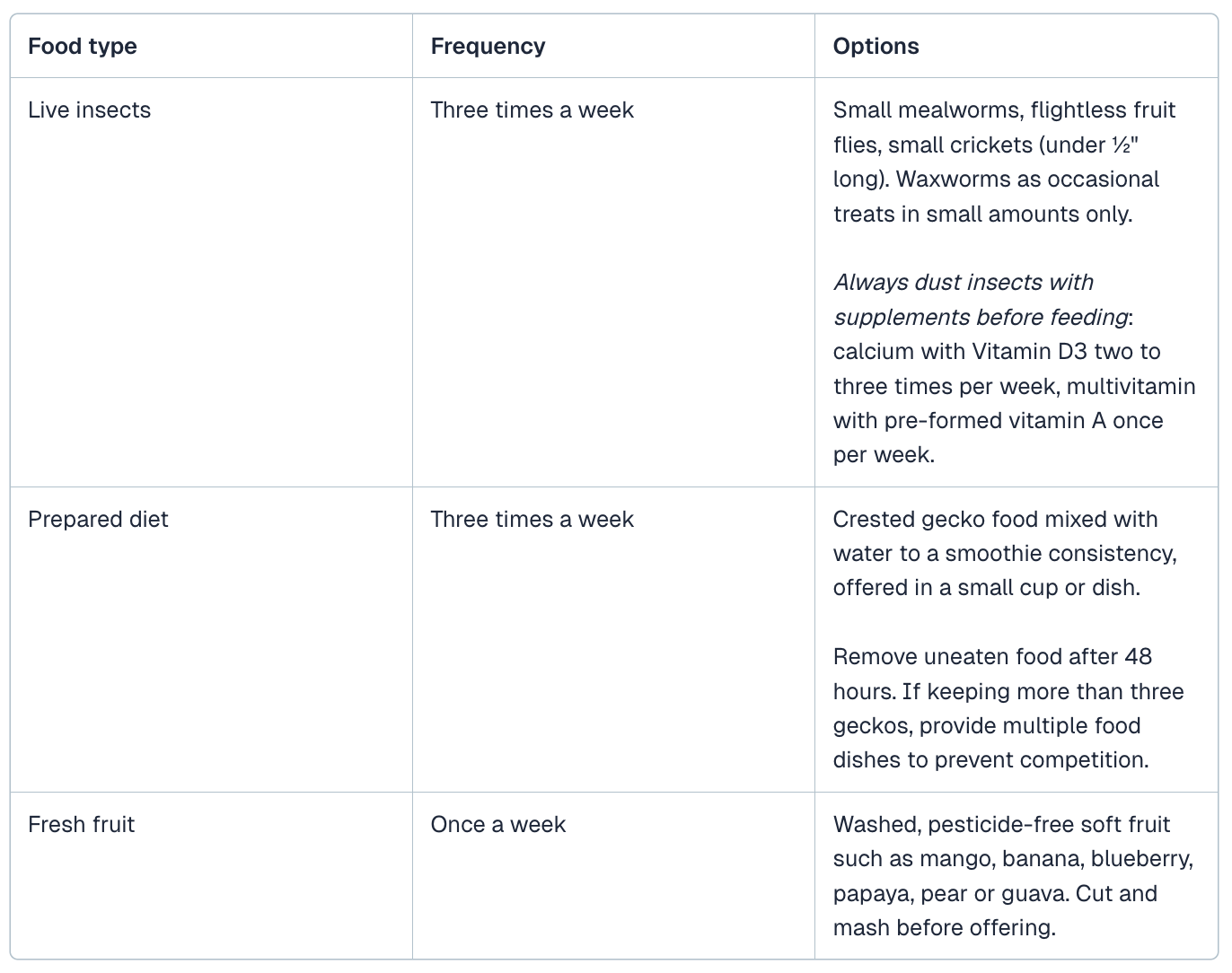
Sample Mourning Gecko feeding schedule:

What does “gut-loaded” mean?
Gut-loaded insects have been fed a high-nutrient diet before being offered to your pet. This boosts the nutritional value of the feeder insects and supports your Mourning Gecko’s health.
Supplements
Because Mourning Geckos produce eggs regularly, it is extra important to always dust insects with supplements. Even small insects, like fruit flies, can be dusted prior to feeding by placing insects into a container with supplement powder preset, close the container, and shake lightly to coat the insects prior to feeding.
If you are supplying UVB in your lighting, your geckos will need a calcium supplement without Vitamin D3. Vitamin D3 is very important to the metabolic pathways of most animals and while too little causes significant health problems so can too much. Using the commercial prepared diet will provide enough Vitamin D3 through the week. Ask your veterinarian for guidance on supplements.
Feeding safety
- Do not offer wild insects. These may carry parasites or pesticide residue that can make your gecko very sick. Always use commercially raised, safe feeder insects.
- Monitor your gecko’s weight and appetite regularly
- If a gecko refuses food for more than one week, check habitat conditions and consult a reptile veterinarian
Hydration
Misting the enclosure 1-2x a day will also provide water droplets on the walls and décor that your gecko can drink. Many geckos will not use a water bowl and rely on these water droplets to stay hydrated.
Optional: Keep a shallow dish of clean water in the habitat at all times. This provides drinking water and supplements humidity levels as the water evaporates.
- Placing small stones in the water dish can help ensure your gecko can easily get in and out of the water dish and minimize risk of accidental drowning if they should slip and fall in
Reproduction, eggs and hatchlings
Mourning Geckos are one of the most fascinating reptile species kept as pets, largely because of their unique reproductive biology. Whether you're a new owner or planning to breed Mourning Geckos, understanding their reproduction cycle, egg care, and hatchling needs is essential.
How Do Mourning Geckos Reproduce? Understanding Parthenogenesis
Mourning Geckos reproduce through parthenogenesis, a form of asexual reproduction where unfertilized eggs develop into embryos that grow into near-clones of the mother. While parthenogenesis occurs in some other animals and plants, Mourning Geckos are one of the few lizard species that rely on it almost exclusively.
For Mourning Gecko owners, this means:
- A single female can produce viable eggs and offspring without a male
- Male Mourning Geckos are extremely rare and typically infertile
- Even a solo gecko may surprise you with eggs
- Offspring will be genetically near-identical to the mother
This adaptation is why Mourning Geckos have flourished as a species and why they've become such a popular beginner-friendly reptile.
Mourning Gecko Egg-Laying Cycle and Signs
A healthy adult Mourning Gecko will lay a clutch of approximately two eggs every 4–6 weeks. The first few clutches from a young gecko may not be viable, but fertility improves as she matures.
Signs your Mourning Gecko is about to lay eggs:
- Increased time spent hiding
- Reduced appetite
- A visible bulge in the abdomen
What Do Mourning Gecko Eggs Look Like?
Mourning Gecko eggs are about the size of a pea. When first laid, they are soft and sticky, allowing them to adhere to whatever surface the female chooses. Within 24–48 hours, the shell fully hardens. Because Mourning Geckos do not nest, eggs may be found anywhere in the enclosure — stuck to decorations, plant leaves, the glass walls, or hides.
How to Care for Mourning Gecko Eggs
Important: Do not try to peel eggs off surfaces. Physically removing eggs from the surface they're attached to almost always destroys them. Instead, use one of these approaches:
For eggs laid on enclosure walls or glass: Cover them with a small protective barrier such as the bottom of a paper cup or a small condiment cup taped over the eggs. This protects them from other geckos while leaving them in place.
For eggs laid on movable décor: Relocate the entire item — leaf, branch, or hide — to a separate incubation container.
Incubating Mourning Gecko Eggs Outside the Enclosure
If you choose to incubate eggs separately, set up a container with these conditions:
- Container: Tight-fitting lid with small ventilation holes (small enough that hatchlings can't escape)
- Substrate: Sterile, moisture-retaining material like vermiculite
- Humidity: 60–80%
- Temperature: 70–80°F (21–27°C)
Mourning Gecko Egg Incubation Time Mourning Gecko eggs typically hatch in 2–3 months. Incubation temperature directly affects timing: warmer temperatures shorten incubation, while cooler temperatures extend it. Protecting Eggs and Hatchlings from Cannibalism Adult Mourning Geckos will eat unprotected eggs and even newly hatched babies — and yes, this happens even when the adults are well-fed. To prevent loss:
- Protect or relocate eggs as described above
- Move hatchlings to a separate enclosure until they're large enough to safely cohabitate with adults
- After hatching, leave babies undisturbed for 24–48 hours before transferring them to a hatchling habitat
How to Care for Mourning Gecko Hatchlings
A hatchling habitat should mirror the adult setup in temperature, humidity, and lighting. A smaller enclosure works well for very young geckos, but by two months of age, hatchlings need to be moved to a larger enclosure or integrated with the adults. There are two key differences between hatchling care and adult care:
1. Hatchlings are prone to dehydration. Keep humidity toward the upper end of the recommended range and provide very shallow water dishes and/or misted water droplets on leaves and surfaces.
2. Hatchlings need smaller feeder insects. Most standard feeders are far too large. Ideal foods for baby Mourning Geckos include:
- Wingless fruit flies (Drosophila melanogaster or D. hydei)
- Pinhead crickets
When to see a veterinarian
In addition to regularly scheduled appointments, contact your reptile veterinarian if you notice the following signs:
- Loose stool for more than two days
- Decreased frequency in droppings
- Eating or drinking less; weight loss
- Swollen joints or reluctance to move
- Discharge from the eyes, nose or mouth
- Shedding problems; discolored skin
- Avoidance of the basking area; more time spent hiding
- Increased basking time
Go to “find a vet” on arav.org for help finding a reptile veterinarian in your area.
NOTE: Most, if not all, reptiles carry Salmonella bacteria in their intestinal tract and intermittently or continuously shed these bacteria in their feces, so they are unsuitable pets for very young children and those with compromised immune systems. Good hygiene must always be practiced around all reptiles, and hands should be washed before and after interacting with reptiles.
SHOPPING CHECKLIST
- 10-Gallon Arboreal Terrarium or larger
- Secure Screened Lid
- Lighting
- Heat Source
- UVB Source
- Thermostat
- Habitat Thermometer(s) And Hygrometer
- Timer for Lighting
- Food Bowl or Feeding Ledge/Cup(s)
- Water Bowl
- Spray Bottle for Misting
- Décor
- Branches/Plants for Climbing and Hiding
- Substrate
- Hide(s)
- Crested Gecko Diet
- Live Insects such as Pinhead Crickets or Flightless Fruit Flies
- Calcium Powder with Vitamin D3
- Multivitamin Powder with pre-formed vitamin A
Ready to learn more? This guide is a great starting place, but we encourage you to do more research on the individual species that you are keeping so that you can be as successful as possible!
Frequently Asked Questions (FAQs)
How often should I handle my Mourning Gecko?
Mourning Geckos are very small and are fragile due to their size. We do not recommend handling your Mourning Geckos unless necessary as it is very easy to injure them accidentally.
Do Mourning Geckos need UVB light?
UVB exposure is essential for vitamin D3 synthesis and proper calcium absorption. Without it, Mourning Geckos can develop Metabolic Bone Disease. It is highly recommended to use a low-intensity UVB bulb and replace it every six months, even if it still lights up.
Can I give my Mourning Gecko vegetables?
Mourning Geckos can eat small amounts of greens, but vegetables aren't part of their natural diet and aren't required. It is safe to offer small amounts of leafy greens if your gecko shows interest. Alternatively, offering vegetables to your feeder insects is a good way to pass along the nutritional benefits without changing your gecko's core diet.
How can I tell if my Mourning Gecko is dehydrated?
Signs include wrinkled skin, sunken eyes, and sluggish behavior. Ensure your gecko has access to fresh water, is misted regularly, and that the humidity is within normal range.
Information in this article is not intended to diagnose, treat or cure your pet and is not a substitute for veterinary care provided by a licensed veterinarian. For any medical or health-related advice concerning the care and treatment of your pet, contact your veterinarian.