
Reptile Feeding Guide
In this Article
Key takeaways
- Not all feeder insects are equal — some are everyday staples, others are best as occasional treats
- Insect size matters — as a general rule, feeders should be no larger than the space between your pet’s eyes
- Gut-loading and dusting with supplements are both important
- Live feeders offer enrichment and nutritional benefits that preserved options can’t fully replicate
- Availability varies by region — ask your local PetSmart associate for what’s in stock
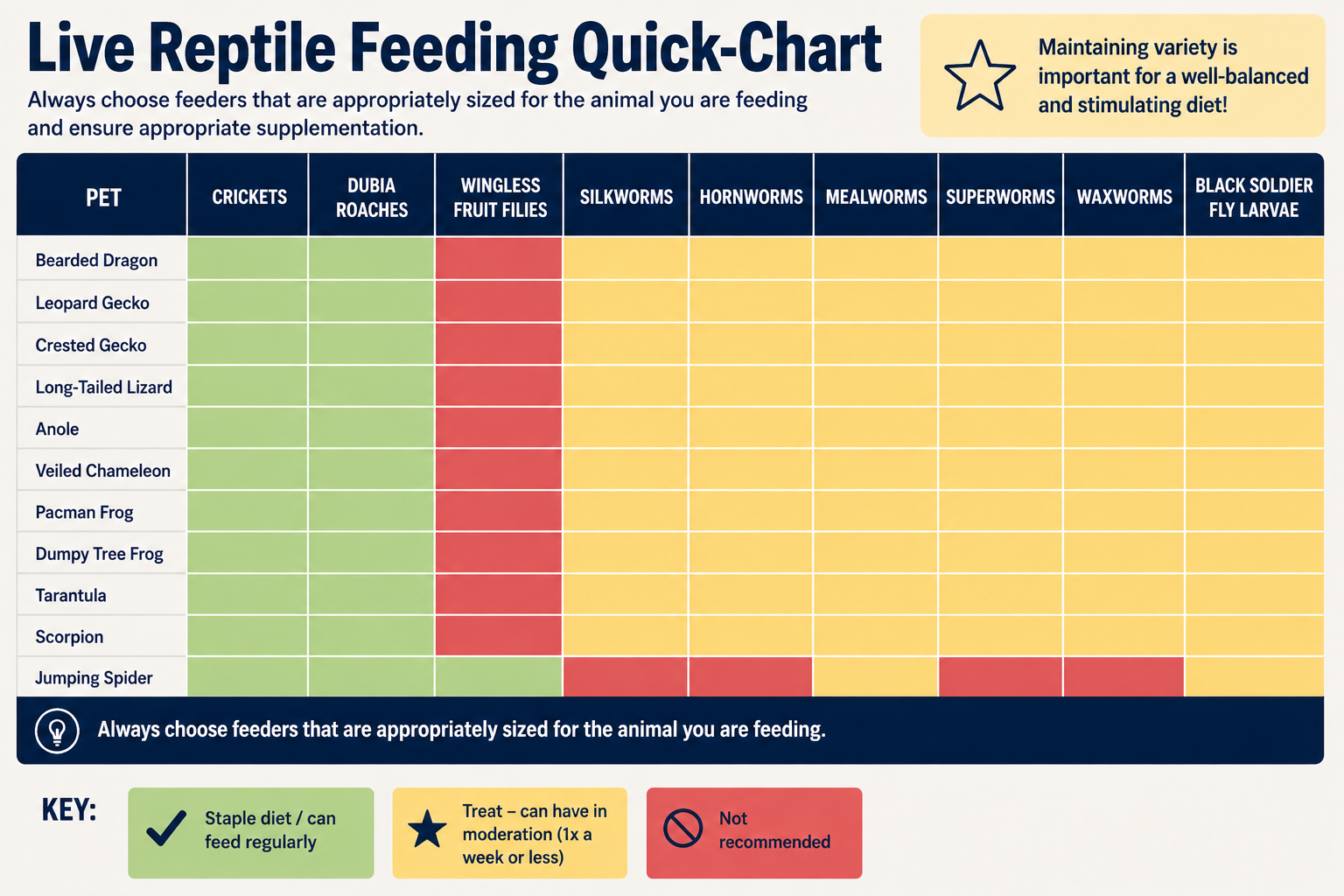
Providing your reptile, amphibian, or invertebrate with the right feeder insects is a key part of supporting their overall health. Some insects are ideal everyday staples, while others are best reserved for maintaining variety in the diet as occasional treats due to their higher fat content or lower nutritional value. Understanding these differences helps you build a balanced, varied diet that keeps your pet thriving.
This guide will walk you through the benefits and drawbacks of popular feeder insects to help you make informed feeding decisions. Keep in mind that availability can vary depending on where you live and some feeders may not be accessible in your region. Rotating in a variety of feeder insects, not just one staple, helps keep your reptile, amphibian, or invertebrate's diet balanced and interesting.
Feeder insect types
Crickets
- High in protein to support healthy growth and muscle development
- Active movement encourages natural hunting behavior and enrichment
- Lean nutrition profile suitable for regular feeding (with supplementation)
- Versatile staple feeder for many reptiles and amphibians
Dubia Roaches
- High in protein to support healthy growth and muscle development
- Nutritious as a staple feeder with better protein-to-fat and calcium-to-phosphorus ratio than many other feeders
- Active movement encourages natural hunting behavior and enrichment
- Lean nutrition profile suitable for regular feeding (with supplementation)
- Soft-bodied and highly digestible, with a lower chitin content than many insects
- Quiet, non-climbing, and slow-moving, making them easy to manage and feed
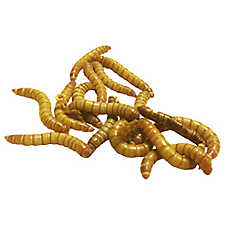
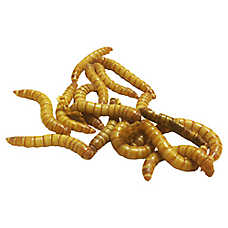
Mealworms
- Convenient to store and can stay dormant for a prolonged time with refrigeration
- Moderate protein with added energy from healthy fat content
- Thin exoskeleton makes them easier to digest than many other beetle larvae
- Great as part of a varied feeding rotation or as a treat due to high fat
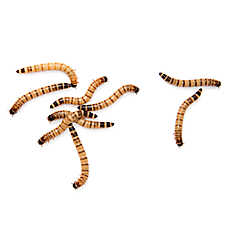
Superworms
- Higher energy content to support growing juveniles and breeding reptiles
- Larger size for medium to large reptiles
- Active and stimulating prey that promotes natural feeding behaviors
- Best used as a supplemental feeder for added variety due to high fat
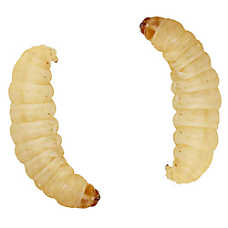
Waxworms
- High-calorie, high-fat treat that reptiles find highly palatable
- Excellent appetite stimulant for picky eaters
- Useful for supporting weight gain in underweight reptiles, but best limited due to high fat content
- Ideal as an occasional treat, not a daily staple
Black Soldier Fly Larvae
- Balanced nutrition profile with protein and healthy fats
- Naturally high enough in calcium that no supplemental calcium dusting is required in most feeding situations
- Highly attractive movement encourages feeding in reluctant reptiles
- Also referred to as Phoenix Worms and CalciWorms
Hornworms
- Extremely high moisture content to support hydration
- Low in fat compared to many other worm options
- Naturally high in calcium
- Soft-bodied and easy to digest
- Bright color and movement stimulate natural feeding response
- Often highly palatable
Earthworms (Red Wigglers/Nightcrawlers)
- Excellent natural calcium balance
- Soft texture for easy digestion
- Great hydration support due to high moisture content
- Ideal for turtles, amphibians, and semi-aquatic species
- Can also be used as cleanup crews for bioactive enclosures
Silkworms
- Lean protein source with low fat
- Rich in essential amino acids to support overall health
- Soft-bodied and highly digestible
- Slow movement makes them accessible for many species
Flightless Fruit Flies
- Perfect size for hatchlings and small species
- Protein-rich despite their tiny size
- Provide excellent enrichment for aerial hunters
- Easy to maintain culture
How much to feed
As a general rule, insects should be no larger than the space between your pet’s eyes. The specific number of a particular type of insects will be dependent on the specific species of reptile, amphibian or invertebrate being fed, as well as their life stage and reproductive status.
Confining prey items
Certain prey items can injure your pet if left in the enclosure for an extended period before being consumed. For mobile prey, such as crickets and dubia roaches, consider feeding in a separate container to keep them from getting lost in your pet’s habitat. In order to provide maximal benefit, pet parents can set-up a contained area large enough to allow for hunting behavior and exercise while feeding.
Supplementation: gut loading and dusting
\When you see “gut-loaded” in reference to feeders, that refers to the diet of the feeder. Gut-loading involves feeding an intentional diet to the bugs in order to improve or increase their nutritional value. This is done to help make them more nutritious to the pet you feed them to. This would mean feeding your bugs no more than about 24-48hrs, prior to feeding them to your pet.
Gut-loading is separate from dusting your insects with supplement powder before feeding. In most cases, you should gut-load AND dust with proper supplementation. For example, even a calcium-rich gut-loading diet alone would likely not meet the calcium needs of a bearded dragon.
Why live feeders matter: live insects vs. preserved
Feeding live insects offers several important benefits, making it one of the most natural and enriching ways to support their health. The movement of live prey naturally stimulates their predatory drive, catching their attention and encouraging even picky eaters to engage. Allowing hunting—whether in the enclosure or a separate feeding bin—also promotes healthy exercise, giving your pet the chance to chase their prey in a way that mimics their wild behavior. Beyond enrichment, live feeders can be gut loaded prior to feeding to boost their nutritional value. This gives you greater control over the quality of nutrition your reptile receives and helps ensure each meal is as beneficial as possible. While live and canned insects provide hydration, dried insects alone contain much less water. This can lead to dehydration in species that receive the majority of their hydration from their food.
Information in this article is not intended to diagnose, treat or cure your pet and is not a substitute for veterinary care provided by a licensed veterinarian. For any medical or health-related advice concerning the care and treatment of your pet, contact your veterinarian.