
The Ultimate Stain & Odor Removal Guide for Pet Parents
In this Article
- Why enzyme cleaners are the gold standard for pet messes
- What not to use on pet stains
- How to clean common pet messes
- Cleaning pet stains by surface type
- How to prevent your pet from returning to the same spot
- What about natural and DIY cleaning options?
- How to choose the right pet stain and odor remover
- Frequently asked questions (FAQs)
Accidents happen. Whether you have a puppy still learning the ropes or a senior cat with a sensitive stomach, pet messes are part of life at home with animals. The good news? The right cleaner and a little know-how make cleanup faster and more effective than you might expect.
This guide covers everything you need to know about removing pet stains and odors from carpets, hard floors, upholstery, bedding, and more. You’ll learn why enzyme-based cleaners work so well, how to tackle the most common types of messes, and how to keep your pet from returning to the same spot.
Why enzyme cleaners are the gold standard for pet messes
Not all cleaners are created equal when it comes to pet accidents. Standard household cleaners and multipurpose sprays can remove visible staining, but they often leave behind the odor compounds that matter most, especially with urine.
Pet urine contains uric acid, a compound that binds tightly to surfaces and doesn’t dissolve in water. When it dries, it forms crystals that reactivate with heat or humidity. This is why a spot can smell fine after cleaning, then return to full strength on a warm or humid day.
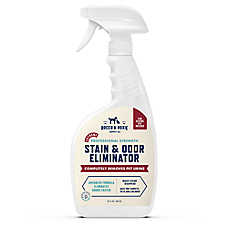
An enzyme cleaner for pet stains works differently. It contains biological enzymes that break down the organic compounds in urine, feces, and vomit at a molecular level, converting them into water and carbon dioxide. The result isn’t just a masked odor. It’s complete elimination of the compounds causing it.
The difference between masking and eliminating
Masking products use fragrance or neutralizing agents to cover odors temporarily. They work for light smells but can’t address the uric acid and bacteria that cause pet odors to return.
Enzyme cleaners eliminate, not cover. They’re especially critical for cat urine, which is more concentrated than dog urine and contains additional compounds that make it particularly persistent.
One important note: enzyme cleaners need time to work. They’re not instant sprays. Following the label’s dwell time, usually 10 to 15 minutes minimum, gives the enzymes time to do their job fully.
What not to use on pet stains
A few common cleaning approaches can actually make pet stains worse.
- Ammonia-based cleaners: Ammonia is a component of urine. Using it on a pet stain can attract your pet back to the same spot, encouraging repeat accidents.
- Steam cleaners on urine stains: High heat can set urine stains and odors permanently into carpet fibers and upholstery. If you plan to steam clean, treat the area with an enzyme cleaner first and let it fully dry before steaming.
- Scrubbing the stain: Vigorous scrubbing spreads the stain deeper and wider. Always blot, working from the outside of the stain inward.
- Letting it air dry without treatment: An untreated dried stain is harder to remove and more likely to attract your pet again. Treat as soon as you discover it.
How to clean common pet messes
Dog urine on carpet
Fresh urine is easiest to treat. Act quickly for the best results.
- Blot up as much liquid as possible with paper towels or a clean cloth. Press firmly but don’t scrub.
- Generously apply an enzyme cleaner to the affected area, making sure to saturate the full spread of the stain, not just the visible center.
- Let the cleaner sit for at least 10 to 15 minutes.
- Blot again with clean towels.
- Allow to air dry completely. Cover the area with a clean towel or light furniture to discourage your dog from revisiting while it dries.
For dried or set-in stains, apply the enzyme cleaner, cover the area loosely with plastic wrap to keep it moist, and let it sit longer, ideally several hours or overnight. Repeat if needed.
Cat urine on carpet or upholstery
Cat urine is more concentrated than dog urine and requires thorough saturation. Light spraying often isn’t enough.
- Blot as much liquid as possible.
- Pour or saturate the area with enzyme cleaner. Cat urine spreads widely through fibers, so cover a larger area than the visible stain.
- Let the cleaner sit for 15 minutes or more.
- Blot thoroughly and allow to dry completely.
- For very stubborn or old stains, a second application after the first has fully dried is often necessary.
For cushions and upholstery, check underneath and behind. Cat urine can saturate padding and reach surfaces you can’t see. Flip and treat both sides of removable cushions when possible.
Pet vomit
Remove the solid matter first before applying any cleaner.
- Scoop or scrape up as much of the mess as possible using paper towels or a plastic scraper. Work from the outside in to avoid spreading.
- Blot remaining moisture with a clean cloth.
- Apply an enzyme cleaner to the affected area and let it sit for the recommended time.
- Blot clean and allow to dry.
Vomit contains stomach acids that can stain quickly, so acting fast helps preserve both the look and smell of your surfaces.
Feces accidents
Remove solids before treating the stain underneath.
- Use paper towels or disposable gloves to pick up and dispose of the mess.
- Treat the remaining stain with an enzyme cleaner, letting it sit for 10 to 15 minutes.
- Blot and allow to dry.
For pet accidents on bedding or washable fabrics, pre-treat with an enzyme cleaner before laundering. Air dry rather than machine dry until you’re confident the odor is gone. Heat from the dryer can lock in residual smells.
Cleaning pet stains by surface type
Carpet and area rugs
Carpet is the most common surface for pet accidents and also one of the trickiest, because liquid wicks down into the padding and backing. Thorough saturation with an enzyme cleaner is essential. Use enough product to reach the depth the urine traveled. If the odor returns after treatment, the padding may be affected. In severe cases, especially with cats who have repeatedly used the same spot, padding replacement may be the most effective solution.
Hardwood and laminate floors
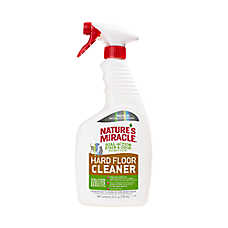
Sealed hardwood is relatively forgiving if you clean up quickly. Blot the mess immediately and clean the surface with an enzyme cleaner formulated for hard floors. Avoid excessive moisture, which can warp wood.
Unsealed or older hardwood presents more of a challenge because urine can soak into the wood grain. Treat promptly and apply a hard-floor enzyme cleaner. If staining is persistent, sanding and refinishing may be needed for extreme cases.
Tile and other hard surfaces
Tile cleans up more easily than carpet or wood. Wipe up the mess, then apply an enzyme cleaner to the tile and, importantly, the grout lines, which are porous and can hold odors even when the tile surface appears clean.
Upholstery and sofas
Check the manufacturer’s cleaning code before treating. Most upholstery labeled “W” (water-safe) can be treated with a standard enzyme cleaner spray. Saturate generously, let sit, blot clean, and allow to air dry. For thick cushions, urine can travel deep. Remove cushion covers when possible and treat the foam insert as well. Let everything dry completely before reassembling.
Mattresses
Blot up as much liquid as possible, then apply enzyme cleaner generously. Let it sit, blot clean, and cover with towels while it air dries. Mattresses take time to dry fully. A fan can speed up the process. A waterproof mattress cover is the best preventive measure for future accidents.
Pet bedding and washable fabrics
Pre-treat with enzyme cleaner, then launder on a warm cycle. Skip the dryer until you’ve confirmed the odor is gone. Air drying lets you check before heat-setting any remaining smell.
How to prevent your pet from returning to the same spot
Pets have a much stronger sense of smell than humans. If they can still detect traces of their previous accident, they’re more likely to use the same spot again. This is why thorough odor elimination, not just stain removal, matters so much.
After cleaning:
- Allow the area to dry completely before letting your pet back in the room.
- Use a blacklight to check for any missed urine spots. Pet urine fluoresces under UV light, making it easier to find areas that aren’t visible to the naked eye.
- Consider a second enzyme cleaner application if any odor remains after the first treatment.
- For carpeted areas, placing a physical barrier or piece of furniture over the spot while you’re working through training can help break the habit.
For dogs still in housetraining, keeping puppy pads in designated areas can reduce accidents while reinforcing where it’s okay to go. For cats, making sure litter boxes are clean and accessible goes a long way in preventing inappropriate elimination.
What about natural and DIY cleaning options?
Some pet parents prefer to try home remedies like baking soda, white vinegar, or diluted hydrogen peroxide for pet messes. These can help with surface odors and some light staining, especially on hard surfaces.
However, DIY solutions have real limitations. They don’t contain the enzymes needed to break down uric acid, so they’re less reliable for urine stains, particularly cat urine, and old or set-in messes. Vinegar can help neutralize some odors on contact but won’t fully address the underlying compounds.
If you prefer a more natural formulation in a commercial product, look for enzyme-based cleaners made with plant-derived ingredients. These provide the enzymatic action needed to genuinely eliminate stains and odors while avoiding harsh synthetic chemicals.
How to choose the right pet stain and odor remover
With a wide range of pet stain and odor removers available, here’s what to look for.
- Enzymatic formula: Look for products that specifically describe an enzymatic or bio-enzymatic formula. These are the most effective for fully eliminating odors.
- Surface compatibility: Check that the product is safe for your specific surface, whether carpet, hardwood, upholstery, or hard floors.
- Species-specific formulas: Some cleaners are formulated specifically for cat messes, which tend to require a more aggressive formula due to higher uric acid concentration.
- Pet- and child-safe: Most quality enzyme cleaners are safe to use around pets and children when dry. Check the label and allow the area to fully dry before pets re-enter.
- Concentration: Concentrated formulas can be more economical for households with multiple pets or frequent accidents.
You can browse the full range of dog cleaning supplies and cat cleaning supplies at PetSmart to find the right fit for your home.
Frequently asked questions (FAQs)
Why does pet urine smell come back after cleaning?
If urine odor returns, it’s usually because the uric acid wasn’t fully eliminated. This can happen when a standard cleaner is used, when the product wasn’t applied thoroughly enough to reach the full depth of the stain, or when heat or humidity reactivates residual crystals. Re-treating with an enzyme cleaner and allowing a longer dwell time typically resolves the issue.
Can I use an enzyme cleaner in a steam cleaner or carpet machine?
Generally, no. The high heat from steam cleaners can deactivate the biological enzymes, making the cleaner ineffective. Pre-treat the affected area with an enzyme cleaner, allow it to dry fully, and then steam clean separately if needed.
How long does it take for an enzyme cleaner to work?
Most enzyme cleaners need at least 10 to 15 minutes of contact time on the surface to be effective. For older or deeper stains, a longer dwell time of several hours or overnight may be needed. Always follow the instructions on your specific product.
My cat keeps returning to the same spot. What should I do?
This usually means residual odor remains that your cat can detect, even if you can’t smell it. Re-treat the area with an enzyme cleaner and allow it to dry completely. A blacklight can help you identify all affected spots. If the problem persists, consider whether the location or surface might need more intensive treatment, such as treating the subfloor or replacing the carpet padding underneath. When possible, simply limiting access to problem locations can help break habits, too.
Are enzyme cleaners safe for pets and kids?
Most enzyme-based cleaners are formulated to be pet- and child-safe once the treated area is dry. Check the label of your specific product, and keep pets and children away from the area until it has dried fully.
What’s the best way to handle a pet accident on a mattress?
Blot up as much moisture as possible right away, then saturate the area with an enzyme cleaner. Let it sit, blot clean, and allow to air dry with good ventilation. A fan can help speed drying. For ongoing protection, a waterproof mattress cover is the most reliable preventive step.
Information in this article is not intended to diagnose, treat or cure your pet and is not a substitute for veterinary care provided by a licensed veterinarian. For any medical or health-related advice concerning the care and treatment of your pet, contact your veterinarian.
In this Article
- Why enzyme cleaners are the gold standard for pet messes
- What not to use on pet stains
- How to clean common pet messes
- Cleaning pet stains by surface type
- How to prevent your pet from returning to the same spot
- What about natural and DIY cleaning options?
- How to choose the right pet stain and odor remover
- Frequently asked questions (FAQs)