
How to Choose the Best Dog Bed

In this Article
Every pup deserves a cozy spot to call their own. The best dog beds do more than give your dog a place to nap. They support growing joints, ease age-related aches, provide a safe retreat from daily stress, and protect your furniture in the process.
The right bed depends on your dog's size, sleep style, health needs, and where you plan to put it. This guide breaks down every type of dog bed, who it works best for, and what to look for before you buy.
Why your dog needs a good bed
Dogs sleep 12 to 14 hours a day on average. That time adds up fast, which means the surface your dog rests on has a real impact on their health and mood.
A well-chosen dog bed can:
- Cushion joints and reduce pressure points during long rest periods
- Support dogs with arthritis, hip dysplasia, or other mobility concerns
- Give your dog a sense of security, especially in a busy or unpredictable household
- Keep your couch, rugs, and floors cleaner and hair-free
- Help dogs manage temperature regulation, particularly in warm climates
Even healthy, young dogs benefit from a designated resting space. It gives them a reliable place to decompress after activity, sleep through the night, and feel grounded in your home.
Types of dog beds: what they are and who they're best for
There's no single best dog bed that works for every pup. Here's a breakdown of the most common styles and the dogs they suit best.
Pillow and bolster dog beds
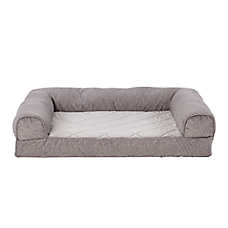
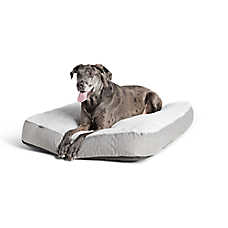
These are the most popular style. They come in flat pillow shapes or rectangular bolster designs with raised edges on one or more sides. They're versatile, available in a wide range of sizes, and easy to move around the home.
Best for:
- Dogs of any size who like to sprawl out or stretch
- Multi-dog households that need simple, practical bedding
- Pet parents looking for an affordable everyday option
Look for models with removable, machine-washable covers if your pup is a heavy shedder or prone to tracking in dirt.
Orthopedic dog beds
Orthopedic dog beds are built with supportive foam cores, often multi-layer, to relieve pressure on joints, muscles, and bones. They're commonly recommended for older dogs and breeds prone to musculoskeletal issues. If your dog has been diagnosed with arthritis, hip dysplasia, or another joint condition, an orthopedic bed can make rest more comfortable.
Talk to your veterinarian about whether one is a good fit for your pup. Shop orthopedic dog beds at PetSmart.
Best for:
- Senior dogs and large breeds like Labs, German shepherds, and Great Danes
- Dogs recovering from surgery or injury (with veterinary guidance)
- Any dog whose current bed leaves them stiff after waking up
Memory foam dog beds
Memory foam dog beds contour to your dog's body, distributing weight evenly and reducing pressure points. They're a step up from standard foam and tend to retain their shape longer with regular use.
Best for:
- Dogs who spend long hours sleeping or resting
- Larger breeds whose weight can compress lower-density foam quickly
- Dogs who rotate sleeping positions frequently throughout the night
Look for beds with a waterproof inner liner if your dog tends to drool or has occasional accidents.
Cooling dog beds
Cooling dog beds use gel-infused foam, elevated mesh platforms, or pressure-activated cooling gel to help regulate your dog's body temperature during rest. They don't require electricity or refrigeration and are especially popular in warmer months.
Best for:
- Thick-coated or double-coated breeds like huskies and golden retrievers
- Flat-faced (brachycephalic) breeds that have trouble regulating heat
- Dogs who live in warm climates or tend to overheat
Elevated cooling beds are also easy to clean and work well outdoors or on patios.
Cuddler and donut dog beds
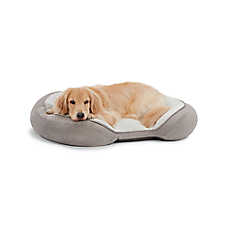
Cuddler beds feature raised, wraparound bolsters or a full donut shape that lets your dog nestle in and feel enclosed. The raised edges give your dog something to rest their head on and can help anxious dogs feel more secure.
Best for:
- Dogs who sleep curled up in a ball
- Smaller breeds and puppies who like to burrow
- Dogs who seem anxious or stressed at rest
Dog beds for crates
Crate mats and flat dog beds designed for crates fit snugly into standard crate dimensions to make your dog's crate feel more like home. They're typically low-profile, durable, and machine-washable. If you use a dog crate for training or overnight sleep, pairing it with the right crate bed makes the space much more comfortable.
Best for:
- Dogs who are crate-trained or in the process of crate training
- Puppies who need a cozy, den-like space
- Dogs who travel frequently and sleep in their crate on the go
Durable dog beds
Extra durable dog beds are built with reinforced, ballistic-grade, or rip-stop fabrics that hold up against dogs who dig, scratch, or chew their bedding. They're not indestructible, but they last much longer than standard beds in the hands of a determined chewer. Best for:
- Dogs who routinely destroy their beds
- High-energy breeds with strong chewing instincts
- Dogs in kennels, crates, or outdoor spaces where supervision is limited
If your dog chews out of anxiety rather than habit, it may also be worth exploring dog anxiety and calming products alongside a durable bed.
How to choose the right dog bed: four key questions
1. How big is your dog?
Your dog should be able to stretch out fully on their bed without hanging off the edge. Measure your dog from nose to tail when they're lying down, then add about 8 to 12 inches. That's your minimum bed size. If you're shopping for large dog breeds like Great Danes, mastiffs, or Bernese mountain dogs, look specifically for dog beds for large dogs rated to hold their weight.
Small breeds, including Chihuahuas, Yorkies, and miniature dachshunds, do well with snug-fitting small dog beds that won't feel overwhelming or exposed.
2. How does your dog like to sleep?
Watch your dog for a few nights before buying. Dogs who sleep stretched out flat need a wide, flat surface. Dogs who curl up into a ball often prefer a cuddler or donut bed with raised edges to lean against. Dogs who like to rest their chin on something may appreciate a bolster design with at least one raised side.
3. Does your dog have any health conditions?
If your dog has joint pain, mobility issues, or is a senior, an orthopedic or memory foam bed can provide meaningful relief. Your veterinarian is the best resource here. A vet visit can help identify underlying issues and inform which type of bed will be most supportive. For more, see A Guide to Supporting Your Dog’s Hip and Joint Health.
4. Where will the bed go?
A crate bed needs to fit your crate's specific dimensions. An outdoor or patio bed should be water-resistant and easy to hose down. A bed in a high-traffic living area may need a washable cover for easy maintenance. Think about the environment before you choose a material or style.
Frequently asked questions about dog beds
How often should I replace my dog’s bed?
Most dog beds last one to three years with regular use and proper care. Replace it sooner if the foam has flattened significantly, the cover is worn through, or your dog has started avoiding it. A bed that no longer provides support isn't doing its job.
What size dog bed do I need for a large dog?
For large breeds, look for beds at least 42 to 54 inches in length and rated for their weight. Always check the manufacturer's weight recommendation, especially for orthopedic or memory foam beds, where density matters for proper support.
Are orthopedic dog beds worth it?
For senior dogs, large breeds, or dogs with joint conditions, yes. The supportive foam in orthopedic beds can meaningfully reduce discomfort during rest. For young, healthy dogs without mobility concerns, a good-quality standard bed may be just as effective.
Can I put a dog bed inside a crate?
Yes, and it's a good idea. A well-fitted crate mat or flat dog bed makes the crate more comfortable and can help with crate training by making the space feel more like a den. Make sure the bed fits without bunching up or taking up too much floor space.
What’s the best dog bed for a dog that chews everything?
Look for chew-resistant dog beds made with reinforced fabrics like ballistic nylon or rip-stop polyester. These won't last forever against a truly determined chewer, but they hold up far better than standard materials.
Are cooling dog beds safe for all dogs?
Most cooling gel beds are safe for healthy dogs. If your pup chews on everything, supervise their use to prevent ingestion of any filling material. For dogs with health conditions, check with your vet before introducing a new type of bed.
Information in this article is not intended to diagnose, treat or cure your pet and is not a substitute for veterinary care provided by a licensed veterinarian. For any medical or health-related advice concerning the care and treatment of your pet, contact your veterinarian.