
Dog Crate Size Chart: Finding the Perfect Fit
In this Article
Choosing the right crate size for your dog is one of the most important decisions you'll make as a pet parent. A properly sized dog crate keeps your pup safe and comfortable while supporting successful training.
Whether you're crate training a new puppy or finding a travel crate for your adult dog, getting the measurements right makes all the difference. This guide will show you exactly how to measure your dog and choose the perfect crate size.
Why crate size matters
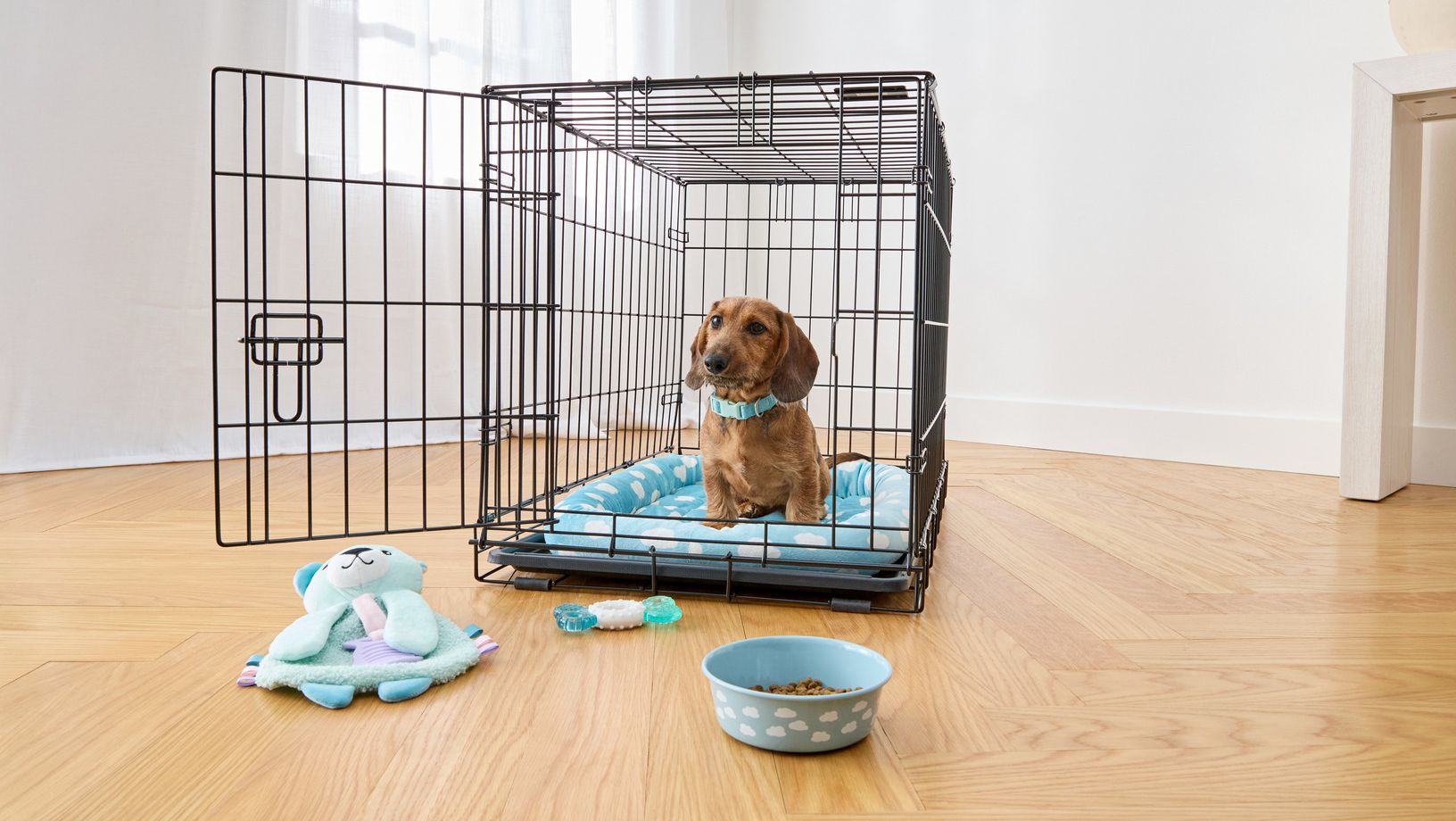
The right crate size creates a den-like space where your dog feels secure. In general, dogs naturally avoid soiling their sleeping area, which makes a properly sized crate an effective housetraining tool.
A crate that fits well provides:
- Enough room for your dog to stand up, turn around, and lie down comfortably
- A cozy, secure feeling that reduces anxiety
- Better success with housetraining
- Safe containment during travel or when you're away
A crate that's too small can cause stress and discomfort. A crate that's too large may encourage your dog to use one end as a bathroom. Finding that sweet spot is key.
How to measure your dog for a crate
Accurate measurements are the foundation of choosing the right crate. You'll need a measuring tape and a few treats to keep your dog standing still.
Measuring your dog's height
- Have your dog stand on all four paws in a natural position
- Measure from the floor to the top of their head or the tip of their ears (whichever is taller)
- Add 2-4 inches to this measurement for the minimum crate height
Measuring your dog's length
- Measure from the tip of their nose to the base of their tail (not including the tail)
- Add 2-4 inches to this measurement for the minimum crate length
Pro tips:
- Measure multiple times to ensure accuracy
- If your dog is between sizes, always size up
- For puppies, measure or estimate their adult size to avoid buying multiple crates
Dog crate size chart
Use this chart as a starting point to match your dog's weight and breed to the appropriate crate size. Remember that individual dogs vary, so always verify with your own measurements.
Crate Size | Dog Weight | Typical Dimensions | Example Breeds |
Extra Small | Under 10 lbs | 18-22 inches long | Chihuahua, Yorkshire Terrier, Toy Poodle |
Small | 11-25 lbs | 24-30 inches long | Shih Tzu, Boston Terrier, French Bulldog, Miniature Schnauzer |
Medium | 26-40 lbs | 30-36 inches long | Cocker Spaniel, Beagle, Corgi, Border Collie, Bulldog |
Large | 41-70 lbs | 36-42 inches long | Labrador Retriever, Golden Retriever, Boxer, Australian Shepherd |
Extra Large | 71-90 lbs | 42-48 inches long | German Shepherd, Rottweiler, Doberman Pinscher, Akita |
XXL | 91+ lbs | 48-54+ inches long | Great Dane, Mastiff, Saint Bernard, Newfoundland |
Common sizing mistakes to avoid
Even experienced pet parents can make sizing errors that affect their dog's comfort and training success.
Buying a crate that's too large
A crate with too much extra space defeats the purpose of housetraining. Your dog may use one end for sleeping and the other as a bathroom. Stick to the 2-4 inch rule when adding space beyond your dog's measurements.
Buying a crate that's too small
A cramped crate creates stress and discomfort. Your dog should be able to stand without hunching, turn around easily, and stretch out when lying down. If your dog seems uncomfortable or anxious in their crate, size might be the issue.
Not accounting for growth
Puppies grow fast. If you buy a crate sized for their current weight, you'll need a new one in a few months. Consider your puppy's expected adult size and look for crates with divider panels that let you adjust the space as they grow.
Special considerations
Crates for growing puppies
Look for crates with adjustable dividers that create a smaller space for your puppy now and expand as they grow. This one-time purchase saves money and ensures your pup always has the right fit.
Many crates come with divider panels specifically designed for this purpose. You can also explore dog training supplies to support your puppy's development alongside proper crate training.
Travel crates and carriers
If you travel with your dog, you may need a separate travel crate. Airline requirements vary, so check specific dimensions before purchasing.
Crates for anxious dogs
Some dogs feel more secure in a covered crate that blocks visual stimulation. Others prefer wire crates with better visibility. Pay attention to your dog's behavior and comfort level. If anxiety persists, consider working with expert dog trainers who can help your pup build positive crate associations.
Multiple dogs sharing a crate
Generally, each dog should have their own crate. This prevents territorial behavior and ensures both dogs have adequate space. If you must crate two dogs together temporarily, measure both dogs and choose a crate that accommodates both comfortably.
FAQs
What happens if my dog's crate is too big?
A crate that's too large can slow down housetraining. Dogs may use one section for sleeping and another for bathroom needs since they have enough space to avoid their sleeping area. Using a divider panel can solve this problem until your dog is fully housetrained.
Should I size up if my dog is between sizes?
Yes, always choose the larger size when your dog's measurements fall between standard crate sizes. A little extra room is better than a cramped space. You can use bedding or blankets to make a slightly larger crate feel cozier.
How do I know if my dog's crate fits properly?
Watch your dog's behavior. They should be able to stand up straight without their head touching the top, turn around without difficulty, and lie down with their legs fully extended. If they seem cramped, hunched, or unable to move comfortably, the crate is too small.
Can I use the same crate for my puppy's entire life?
Yes, if you buy a crate sized for your puppy's adult dimensions and use a divider panel to adjust the space as they grow. This approach saves money and ensures your dog always has a properly sized space.
Do different crate types come in different sizes?
Wire crates, plastic crates, and soft-sided crates all come in similar size ranges. The measurements refer to interior dimensions, so a 36-inch wire crate should provide similar space to a 36-inch plastic crate. Choose the type based on your needs, then focus on the measurements.
What size crate does my dog need if they'll stay at a boarding facility?
Most boarding facilities provide appropriately sized accommodations for your dog. If you're considering PetsHotel stays or Doggie Day Camp, the staff will match your dog to the right space based on their size and comfort needs.
Information in this article is not intended to diagnose, treat or cure your pet and is not a substitute for veterinary care provided by a licensed veterinarian. For any medical or health-related advice concerning the care and treatment of your pet, contact your veterinarian.